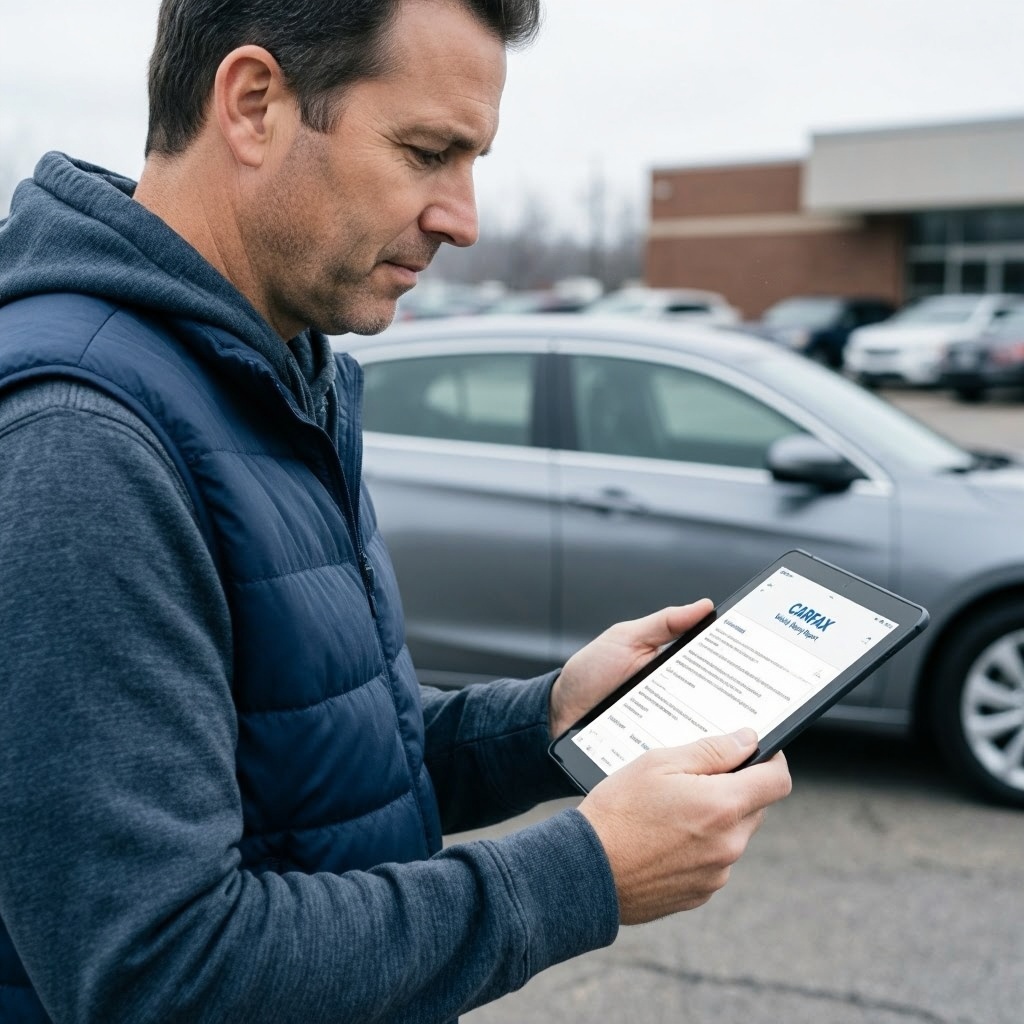
You’re about to spend $15,000, $25,000, maybe $40,000 on a used car. The seller hands you a Carfax report with a confident smile. “See? Clean history. No accidents.”
And you want to believe it. But somewhere in the back of your mind, a question nags: can I actually trust this thing?
It’s a fair question — one that millions of buyers ask every year. You’re about to put real money on the table based partly on a report generated by a company you’ve never met, using data from sources you can’t verify. That deserves honest scrutiny.
So let’s give it exactly that.
Quick Verdict: Is Carfax Reliable?
Yes — Carfax is reliable for the data it has. When Carfax reports an accident, a title brand, an odometer reading, or a service visit, that information comes from verified institutional sources like insurance companies, state DMVs, and dealership service departments. The data it presents is generally accurate.
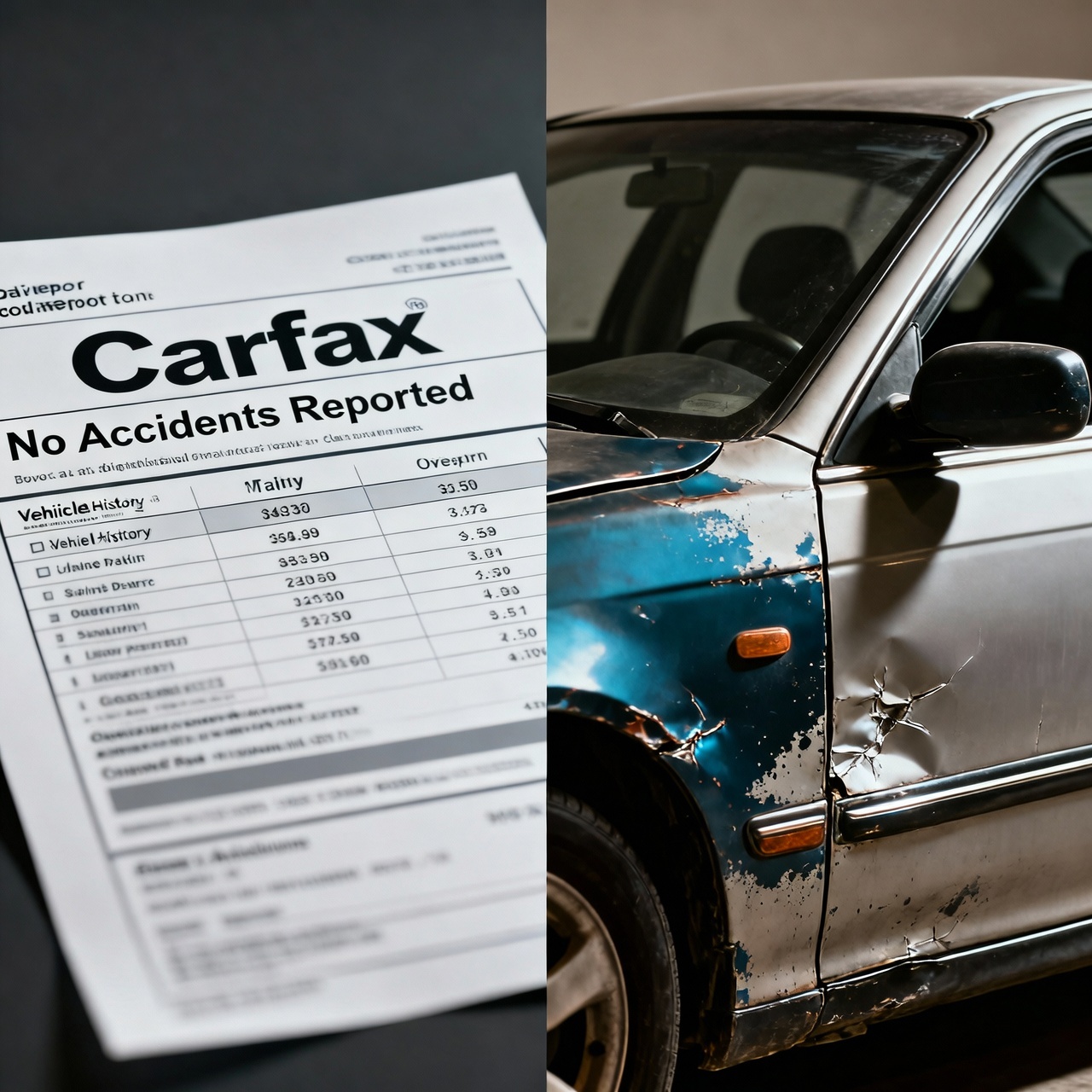
But Carfax is not complete. It cannot capture events that were never reported to its network — cash repairs, unreported accidents, independent shop work, and incidents that bypassed insurance and police. A clean Carfax report means nothing negative was reported, not that nothing negative ever happened.
Reliable ≠ comprehensive. That’s the distinction every buyer needs to internalize before making a decision based on a Carfax report.
How Carfax Works
Carfax is a data aggregation service. They don’t inspect vehicles, employ mechanics, or physically examine cars. Their entire operation is built on collecting information that other organizations generate and compiling it into a single, VIN-specific report. A detailed look at where Carfax gets its information reveals both the strength and the structural limits of their network.
They pull from over 100,000 data sources, including:
- Insurance companies — The primary source for accident and collision data
- State DMVs — Title status, ownership transfers, odometer readings
- Police departments — Accident reports filed by law enforcement
- Franchise dealerships — Service records from brand-affiliated shops
- Auction houses — Vehicle condition at wholesale sale
- Fleet and rental companies — Usage and maintenance during fleet service
- Government agencies — Recalls, inspections, emissions compliance
When something happens to a car and it passes through any of these channels, Carfax catches it. The system works well — within the boundaries of what’s reported to it.
What Carfax Does Well
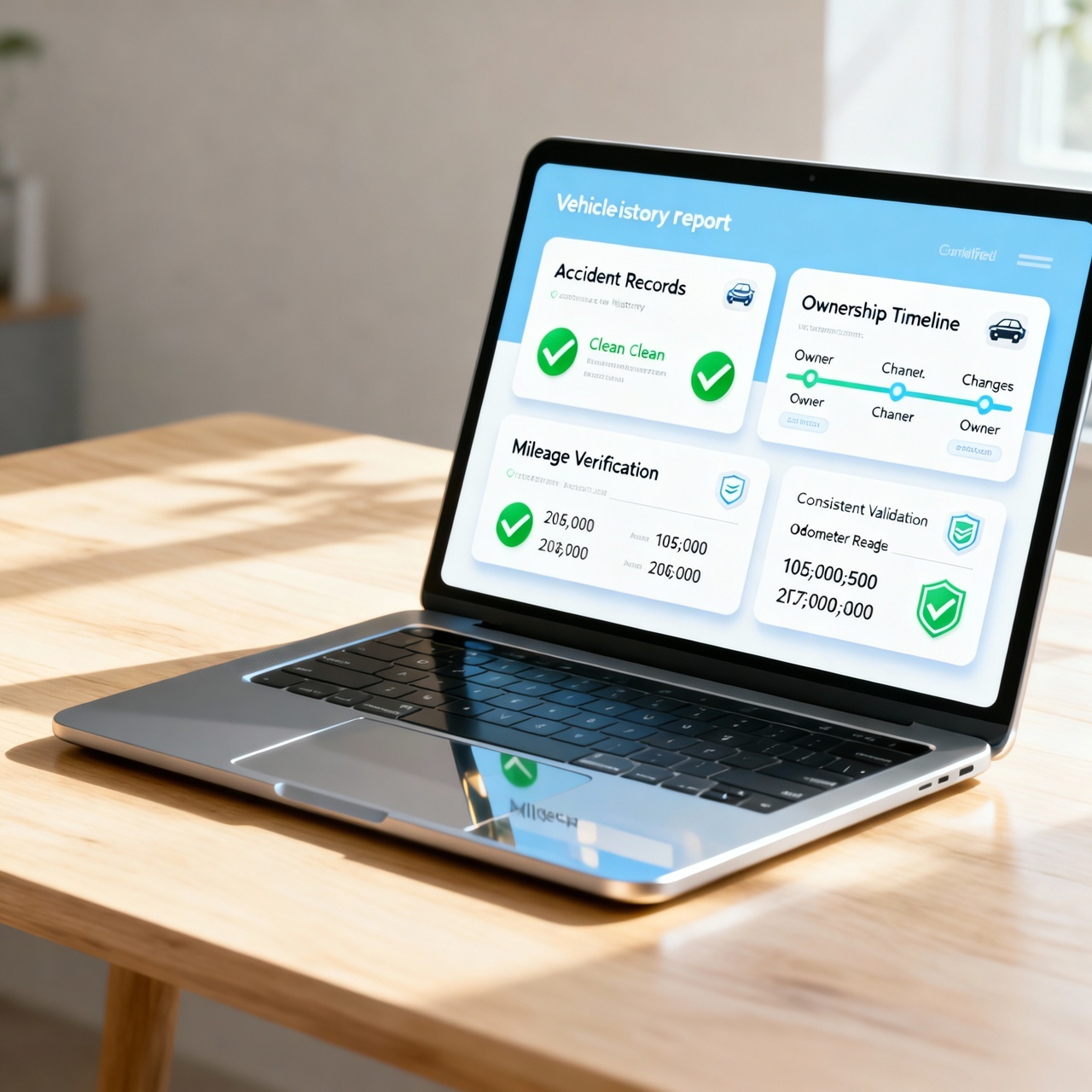
Credit where it’s due. There are things Carfax handles exceptionally well, and dismissing the entire service because of its limitations would be just as misguided as blind trust.
Accident Detection Through Insurance Records
When an accident generates an insurance claim — which the majority of significant accidents do — Carfax captures it with high reliability. Insurance companies report claim data to industry databases, and Carfax has agreements to access that information. If someone filed a claim, you’ll almost certainly see it.
Title History and Brand Tracking
Salvage titles, rebuilt titles, flood brands, lemon law buybacks — Carfax tracks these through state DMV records. This is arguably the most valuable function of a Carfax report. Catching a washed title or hidden salvage history can save you from a catastrophic purchase.
Odometer Verification
Carfax compares odometer readings from multiple touchpoints — DMV records, service visits, inspections, auction data — to flag inconsistencies. If the mileage goes backward or shows suspicious jumps, the report flags a potential rollback. This protection alone has saved countless buyers from odometer fraud.
Ownership and Registration Timeline
The report shows how many owners the vehicle has had, where it was registered, and how long each owner kept it. Rapid ownership changes or cross-country title transfers can signal problems that individual buyers would never catch on their own.
Recall and Service History
For vehicles serviced at franchise dealerships, Carfax provides detailed maintenance records and tracks whether manufacturer recalls have been addressed. This is genuinely helpful data that’s difficult to obtain elsewhere. The National Highway Traffic Safety Administration (NHTSA) maintains the definitive recall database, and Carfax integrates this data into their reports.
What Carfax Misses — And Why It Matters
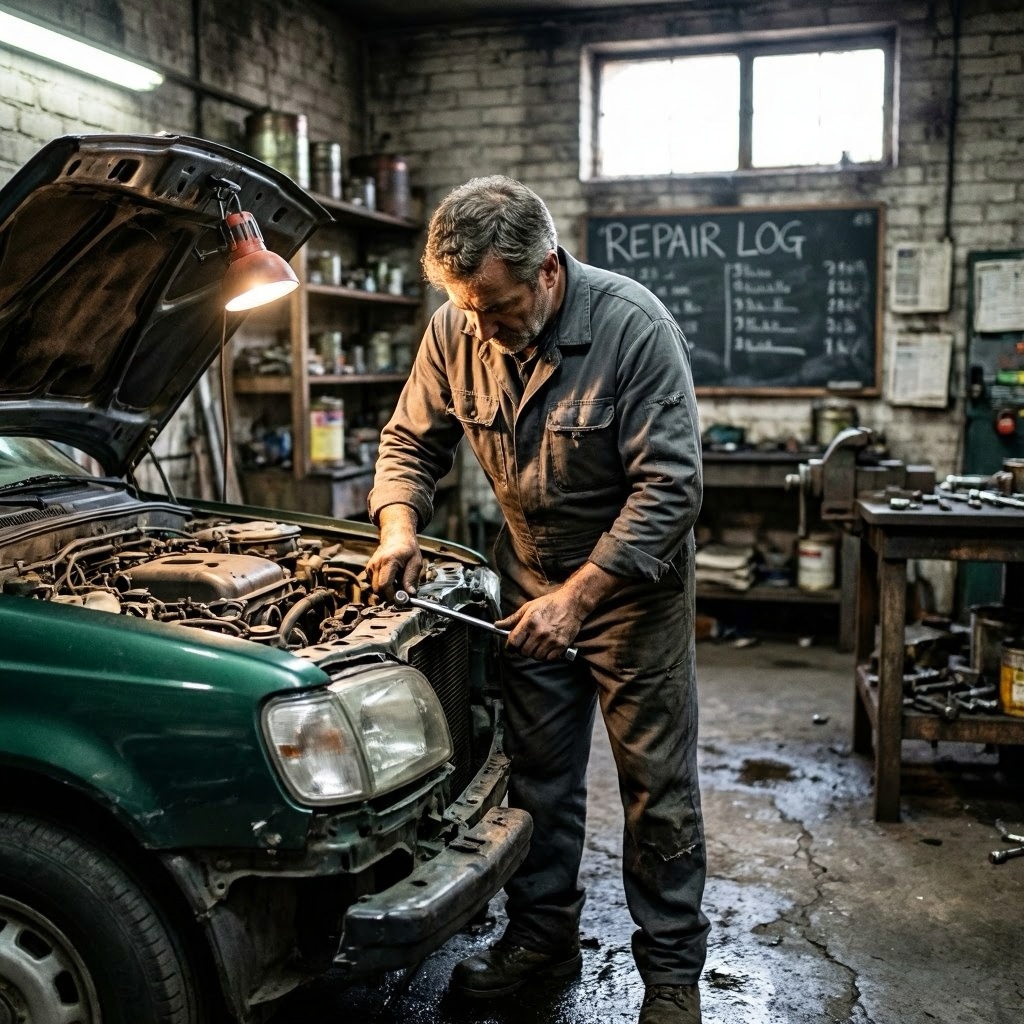
Here’s where the conversation gets real. Because the gaps in Carfax’s coverage aren’t minor footnotes — they represent entire categories of events that routinely go undetected.
Out-of-Pocket Collision Repairs
When an owner pays cash for accident repair — no insurance claim, no police report — Carfax has no way to know about it. This is the single largest gap in their system, and it’s exploited constantly. Owners avoid insurance to prevent premium hikes. Sellers fix damage to preserve resale value. The car gets repaired, the Carfax stays clean, and the next buyer has no idea.
Independent Body Shop Work
There is no legal requirement for body shops to report repairs to Carfax or any vehicle history service. The overwhelming majority of independent collision repair facilities don’t participate in data sharing. A car could have its entire quarter panel replaced at an independent shop and leave zero trace in any database.
Independent Mechanic Service Records
If the previous owner used an independent mechanic for all maintenance — oil changes, brake jobs, transmission services — those visits won’t appear on Carfax. The report might show sparse service history, leading you to assume the car was neglected when it was actually well-maintained. Just not at a franchise dealer.
Private Settlements Between Drivers
Two cars collide in a parking lot. One driver pays the other $800 cash. Nobody calls police. Nobody calls insurance. The damage gets fixed at a friend’s shop. Carfax captures absolutely nothing from this scenario, even though the car sustained real damage.
Flood Damage Via Title Washing
After major flooding events, damaged vehicles sometimes get moved to states with lax titling requirements, re-registered with clean titles, and resold. While Carfax catches many of these through their NICB data integration, the title-washing pipeline is persistent enough that some flood cars still slip through with clean reports.
Mechanical Condition
Carfax tracks events — not condition. A car could have a failing transmission, leaking head gasket, or worn-out suspension, and none of that will appear on the report. Carfax tells you what happened to the car. It doesn’t tell you what’s currently wrong with it.
Is Carfax 100% Accurate?
No. And Carfax themselves would tell you the same thing. Their reports include disclosures acknowledging that not all events are reported and that information gaps exist.
But accuracy and completeness are different things. Let’s separate them:
Accuracy: When Carfax reports something, it’s almost always correct. Insurance claims are real. Title brands are verified through state databases. Odometer readings come from documented sources. The data Carfax presents is highly accurate.
Completeness: Carfax does not and cannot capture every event in a vehicle’s life. Their data is only as comprehensive as their reporting network, and that network — despite being large — has significant blind spots. The absence of negative information on a Carfax report does not mean the absence of negative events.
This is the subtle but critical distinction most buyers miss. They see “no accidents reported” and read it as “no accidents occurred.” Those are fundamentally different statements.
Carfax vs. Reality: What the Data Actually Covers
| What Carfax Claims | What That Actually Means |
|---|---|
| “No accidents reported” | No accidents were reported to Carfax’s sources — not that no accidents occurred |
| “Clean title” | No title brand appears in state DMV records accessed by Carfax — but title washing exists |
| “1-owner vehicle” | One titled owner in their records — but the car may have had additional unregistered drivers or users |
| “Service records available” | Records from participating facilities only — independent shop visits are absent |
| “No odometer problems” | Recorded mileage points are consistent — but readings between those points are unknown |
| “Carfax Buyback Guarantee” | Limited protection — covers specific defects in the report, not all possible issues with the car |
None of this makes Carfax dishonest. Their reports are accurately worded if you read carefully. The problem is that marketing, sellers, and casual buyers have inflated “clean Carfax” into something it was never intended to be — a guarantee. Understanding what a clean Carfax report actually means is one of the most important things a buyer can know before stepping onto a dealership lot.
Myth vs. Truth
Myth: If Carfax says no accidents, the car was definitely never in one.
Truth: Carfax only reports accidents that enter their database through insurance claims, police reports, or participating repair facilities. Unreported collisions — especially those repaired out of pocket — will not appear regardless of their severity.
Myth: Carfax catches everything because they have 100,000+ sources.
Truth: 100,000 sources sounds comprehensive, but those sources are concentrated in formal channels — insurance, government, dealerships. The hundreds of thousands of independent repair shops, private transactions, and informal settlements remain largely outside their network.
Myth: A Carfax report is all you need before buying a used car.
Truth: A Carfax report is one of several tools you need. A pre-purchase inspection by an independent mechanic, a physical examination of the vehicle, and a VIN check through multiple services are equally important. No single report covers everything.
Myth: Carfax is biased toward making cars look good so dealers sell more.
Truth: Carfax reports what their data sources provide. They don’t editorialize, filter, or spin the data. The reports are factual within the scope of available information. The limitation isn’t bias — it’s coverage.
Myth: Other vehicle history services have the same data as Carfax.
Truth: Different services access different databases and data-sharing agreements. Carfax, AutoCheck, NMVTIS-based services, and platforms that offer a VIN check online each pull from overlapping but distinct sources. Cross-referencing multiple reports catches more than relying on any single one.
Trust Carfax When:
- You want to verify title status — salvage, rebuilt, flood, and lemon law brands are well-captured
- You need to check odometer consistency across the vehicle’s recorded history
- You want to see insurance-reported accident history
- You need to review dealership service records and recall completion status
- You want to understand the ownership timeline and registration history
- You’re using it as a starting point — not your only data source
Do NOT Rely On Carfax Alone When:
- The car shows physical signs of repair that the report doesn’t mention
- The vehicle was purchased at auction or imported from another state recently
- The seller uses “clean Carfax” as the answer to every question
- You haven’t had the car physically inspected by an independent mechanic
- The price seems too low for the car’s apparent condition and market value
- You’re buying from a private party with no service documentation
- The car has gaps in ownership or registration history
Pro Tips: How Smart Buyers Use Carfax Correctly
- Treat Carfax as a filter, not a verdict. Use it to eliminate the worst candidates — salvage titles, odometer fraud, serial accident cars. Then dig deeper on the ones that pass.
- Run every VIN through multiple services. CarfaxVINLookup.com provides comprehensive reports that may capture data points other individual services miss. Cross-referencing is the closest thing to a complete picture you can get digitally.
- Read the disclaimers at the bottom. Carfax includes specific language acknowledging gaps in coverage. If you read their own fine print, you’ll understand the report’s limitations before they catch you off guard.
- Always pair the report with a physical inspection. A $200 pre-purchase inspection from an independent mechanic reveals what no report can — current mechanical condition, hidden repair work, structural integrity, and problems developing under the surface.
- Use a paint thickness gauge on every car. For $30–$50, this tool instantly reveals repainted panels that Carfax knows nothing about. If three panels on a “clean Carfax” car have double the paint thickness of the others, you’ve found unreported body work.
- Ask the right questions. Instead of “does the car have a clean Carfax?”, ask the seller: “has any body work ever been done on this car?” Specific questions bypass the Carfax shield and get to the truth faster.
Frequently Asked Questions
Is Carfax reliable for buying a used car?
Carfax is a reliable source for reported data — accidents filed through insurance, title status from DMVs, and service records from participating facilities. However, it should be used alongside a physical inspection and additional VIN checks, not as a standalone decision tool.
Can Carfax miss an accident?
Yes. Any accident that didn’t generate an insurance claim, police report, or record at a participating repair facility will not appear on a Carfax report. Out-of-pocket repairs at independent shops are the most common way accidents go undetected. Even events Carfax does capture — like minor damage entries — require careful interpretation to understand what they actually mean for the vehicle.
Is Carfax better than AutoCheck?
They’re different tools that access different databases. Carfax tends to have stronger insurance and dealership service data, while AutoCheck (owned by Experian) may capture some auction and scoring data that Carfax doesn’t. The smartest approach is checking both.
Does a clean Carfax mean no problems?
No. A clean Carfax means no problems were reported to Carfax’s sources. The car could have unreported accident history, hidden body work, or mechanical issues that the report simply can’t detect.
How accurate is Carfax odometer information?
Highly accurate for the readings it captures. Carfax compares odometer data from DMV records, service visits, inspections, and auctions to detect rollbacks. However, it only captures readings at specific touchpoints — it doesn’t monitor the odometer continuously.
Should I pay for a Carfax report?
Yes — if you’re serious about a vehicle, a Carfax report is worth the investment. But before paying full price, explore your free carfax report options and complement with a VIN check through CarfaxVINLookup.com and a professional pre-purchase inspection for the most complete picture.
Can Carfax data be wrong?
Rarely, but it’s possible. Data entry errors at reporting facilities, delayed information transmission, and occasional system glitches can result in inaccuracies. If you believe a Carfax entry is incorrect, you can file a data dispute directly with Carfax for review.
The Honest Bottom Line
Is Carfax reliable? Yes — for what it captures. Is it the whole story? No. And understanding that gap is what separates buyers who make smart decisions from buyers who get surprised.
Carfax is a powerful screening tool. It catches title fraud, flags insurance-reported accidents, verifies mileage, and documents dealership service history. Those capabilities are genuinely valuable and have protected millions of buyers from serious mistakes.
But it cannot see what was never reported. And in the used car world, a lot goes unreported.
Use Carfax as the first layer of your research. Then build on it — run a comprehensive VIN check at CarfaxVINLookup.com, get the car inspected by a mechanic, and examine it with your own eyes. When you combine digital records with physical verification, you’re not trusting any single source. You’re trusting the evidence. And that’s the only thing worth trusting when real money is on the line.