
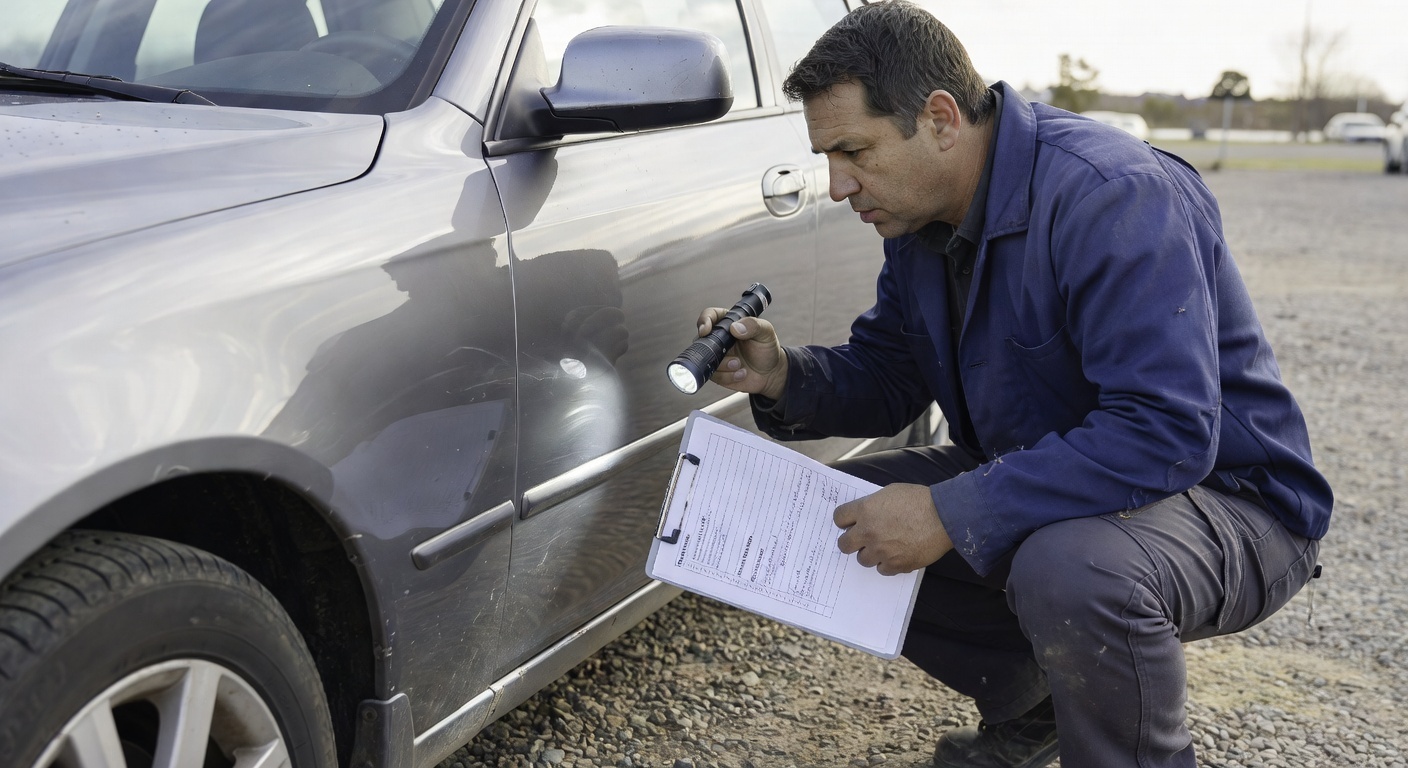
You’re scrolling through a Carfax report, feeling good about the used car you’ve been eyeing, and then you spot it — “Vehicle Reconditioned.” Your stomach drops a little. Is that bad? Does it mean the car was wrecked? Is someone trying to hide something?
Take a breath. That entry on the report doesn’t mean what most people assume it means, and jumping to conclusions here can cost you a great deal — or cause you to walk away from a perfectly solid vehicle for no good reason.
Let’s break down exactly what “vehicle reconditioned” means on Carfax, who does the reconditioning, why it shows up, and whether it should actually worry you.
Quick Answer: What Does “Vehicle Reconditioned” Mean on Carfax?
“Vehicle Reconditioned” on a Carfax report means the car underwent some form of preparation, refurbishment, or cosmetic improvement — typically by a dealership or auction facility — before being offered for sale. It does not necessarily indicate major mechanical repair, accident damage, or structural issues. In most cases, reconditioning involves detailing, minor cosmetic fixes, fluid changes, tire replacement, or other work intended to make the vehicle more presentable and retail-ready.
Think of it this way: reconditioning is the automotive equivalent of staging a house before listing it. The dealer wants the car to look and feel its best, so they invest in cleaning it up. That process gets logged, and Carfax picks it up.
Why Does “Vehicle Reconditioned” Appear on a Carfax Report?
Carfax collects data from a massive network of sources — dealerships, service facilities, auctions, and state agencies among them. If you’re curious about exactly how that data pipeline works, this breakdown of where Carfax gets its information explains the full picture. When a vehicle passes through a facility that reports to Carfax and undergoes any form of reconditioning, that activity gets recorded on the vehicle’s history.
The most common triggers for this entry include:
- Dealer trade-in processing — When a dealership takes a car on trade, they almost always recondition it before putting it on the lot. This can range from a basic wash and vacuum to replacing brake pads, buffing out scratches, and touching up paint chips.
- Auction preparation — Wholesale auction houses like Manheim and ADESA often recondition vehicles to improve their sale price. This might include mechanical inspections, minor repairs, and cosmetic cleanup.
- Certified Pre-Owned (CPO) programs — Manufacturer CPO programs require vehicles to pass multi-point inspections and meet specific standards. The work done to bring a car up to CPO spec is a form of reconditioning.
- Lease return processing — When a leased vehicle comes back, the leasing company or dealer inspects it and addresses wear items before remarketing it.
- Fleet vehicle decommissioning — Rental companies, corporate fleets, and government agencies recondition vehicles when they cycle them out of service.
In all of these scenarios, “reconditioned” is a routine part of the used car lifecycle. It’s not a red flag by itself — it’s standard operating procedure.
What Kind of Work Does Reconditioning Actually Involve?

This is where people’s imaginations tend to run wild. They see “reconditioned” and picture engine rebuilds or frame welding. The reality is usually far more mundane.
Typical reconditioning work includes:
- Interior and exterior detailing (deep cleaning, carpet shampooing, leather conditioning)
- Paint touch-up for minor chips and scratches
- Windshield chip repair or replacement
- Tire replacement or rotation
- Brake pad and rotor replacement
- Oil change and fluid top-offs
- Battery replacement
- Headlight restoration or bulb replacement
- Dent removal (paintless dent repair)
- Wheel refinishing or curb rash repair
- Replacing worn floor mats or missing accessories
Could reconditioning involve more significant work? Sure. Sometimes a dealer will replace a transmission, fix an AC compressor, or address a suspension issue as part of reconditioning to make a car retail-ready. But even that isn’t inherently alarming — it means the problem was identified and addressed before the car reached you.
What reconditioning almost never means is that the car was in a major accident and rebuilt. That’s a completely different category with different terminology and different reporting.
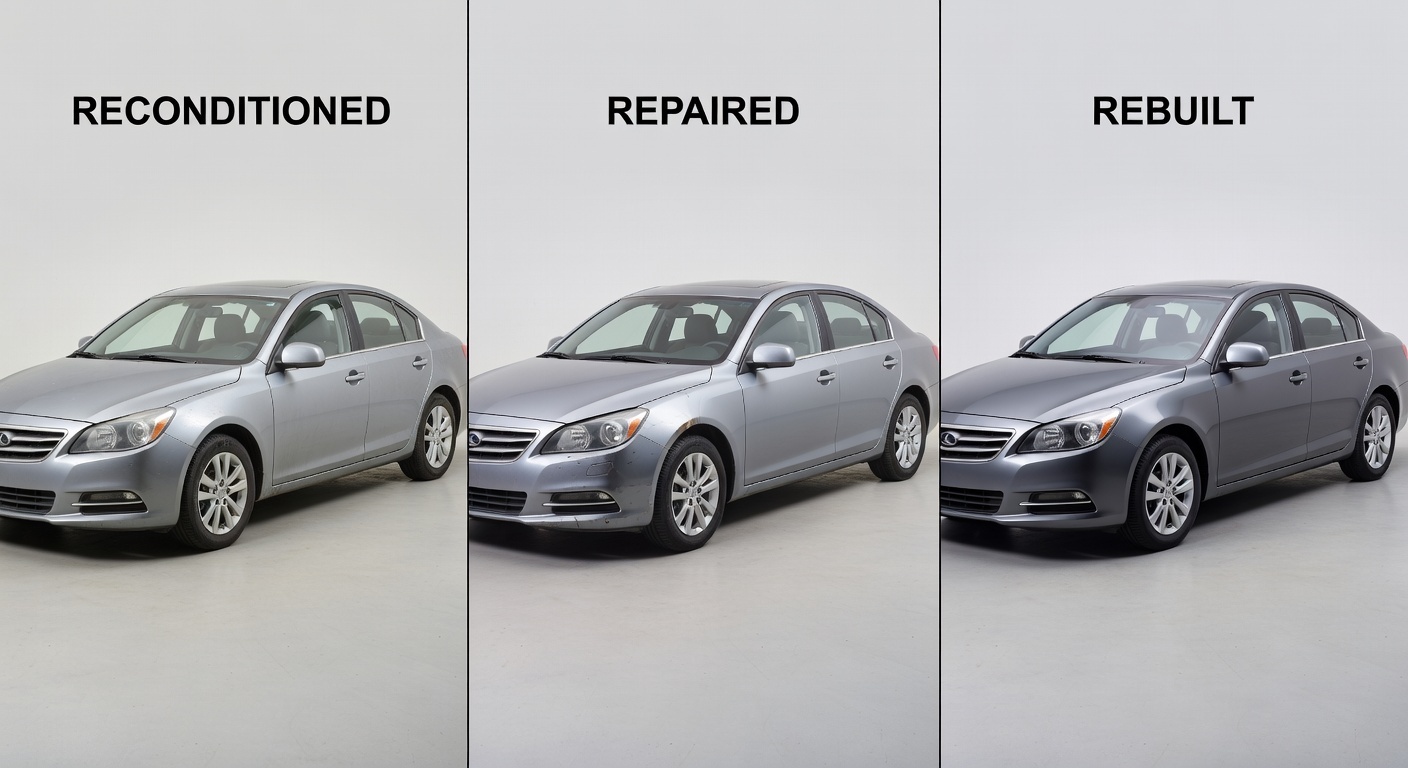
Reconditioned vs. Repaired vs. Rebuilt: Understanding the Differences

These three terms get conflated constantly, and it leads to real confusion. They mean very different things on a Carfax report — and in real-world implications for buyers.
Reconditioned
General preparation and refurbishment to make a vehicle sale-ready. Primarily cosmetic and maintenance-oriented. Does not imply accident damage or major mechanical failure. This is standard practice across the dealership industry.
Repaired
Indicates that specific damage — often from an accident, hail, or other incident — was fixed. A “repair” entry on Carfax usually means something broke or was damaged and needed to be restored to proper condition. This is more significant than reconditioning and warrants closer investigation into what exactly was repaired and why. If the report shows damage alongside reconditioning, it’s worth reading up on what minor damage on Carfax really means before making any judgments.
Rebuilt
This is the serious one. A “rebuilt” designation typically means the vehicle was previously declared a total loss by an insurance company (given a salvage title), then repaired and inspected sufficiently to receive a rebuilt title and return to the road. According to the National Highway Traffic Safety Administration (NHTSA), buyers should exercise extra caution with rebuilt title vehicles, as the quality of repairs can vary dramatically and may affect crashworthiness and long-term reliability.
Here’s a quick breakdown:
- Reconditioned = Cleaned up, routine prep, normal wear items addressed. Low concern.
- Repaired = Something specific was damaged and fixed. Moderate concern — investigate further.
- Rebuilt = Previously totaled, then restored. High concern — requires thorough inspection and verification.
If your Carfax shows “Vehicle Reconditioned” and nothing else alarming, you’re likely looking at a car that simply went through standard dealer prep. If you see “repaired” or “rebuilt” alongside it, that’s when you need to dig deeper.
Who Performs Vehicle Reconditioning?
Understanding who does the reconditioning can tell you a lot about what was likely done and how thoroughly.
Franchise Dealerships
These are typically the most thorough. A franchise dealer reconditioning a trade-in for retail sale will usually perform a multi-point inspection, address any safety issues, handle cosmetic imperfections, and ensure the car meets their lot standards. If the reconditioning was done at a reputable dealer, that’s generally a positive sign — it means someone invested in making the car right.
Independent Used Car Dealers
Quality varies wildly here. Some independent dealers run professional operations with dedicated reconditioning bays. Others do the bare minimum to get a car looking presentable. When you see reconditioning from an independent dealer, it’s worth asking what specifically was done.
Auction Houses
Wholesale auctions recondition vehicles to maximize sale prices. The work tends to be efficient and focused on appearance — detailing, minor paint work, mechanical basics. It’s competent but rarely exhaustive. Auction reconditioning is a signal that the car passed through wholesale channels, which is neither good nor bad on its own but worth noting.
Rental and Fleet Companies
Enterprise, Hertz, and other rental companies recondition vehicles when they sell them out of their fleets. This typically includes professional detailing, maintenance services, and addressing any damage accumulated during the rental period. Fleet reconditioning is usually well-documented and follows standardized procedures.
Is a Reconditioned Vehicle a Bad Buy?
Here’s the honest answer: no, not inherently.
A “Vehicle Reconditioned” entry on Carfax, by itself, tells you that someone spent time and money preparing the car for sale. In many cases, that’s exactly what you want. Would you rather buy a car that a dealer took the time to inspect and refresh, or one they just wiped down and parked on the lot?
That said, the reconditioning entry becomes more interesting — and potentially concerning — when combined with other Carfax entries. Here’s what to watch for:
- Reconditioning + Accident Reported — The reconditioning may have been partly to address accident damage. Dig into the accident details and get the car inspected.
- Reconditioning + Multiple Owners in Short Time — Frequent ownership changes combined with reconditioning could indicate the car has problems that successive owners couldn’t tolerate.
- Reconditioning + Title Change — If a title brand (salvage, flood, lemon) appears near the reconditioning date, the work may have been done to mask serious issues.
- Reconditioning + No Service History — A car that was reconditioned but has gaps in maintenance records deserves closer scrutiny.
Context matters enormously. A single “Vehicle Reconditioned” entry on an otherwise clean report with consistent service history and one or two owners? That’s about as benign as it gets.
Myth vs. Truth: Common Misconceptions About “Vehicle Reconditioned”
Myth: “Reconditioned means the car was in a wreck and they’re trying to cover it up.”
Truth: Reconditioning has nothing to do with accidents in most cases. It’s a standard process that virtually every used car goes through before retail sale. Accident history would appear as a separate entry on the Carfax report — “Accident Reported,” not “Vehicle Reconditioned.” Keep in mind that not all body shop work gets reported to Carfax, which is exactly why physical inspection matters.
Myth: “If a car was reconditioned, there must be something wrong with it.”
Truth: Actually, the opposite is often true. Reconditioning means someone identified wear items or cosmetic issues and fixed them. A car that wasn’t reconditioned before sale arguably received less attention and care before being listed.
Myth: “Reconditioned and rebuilt are basically the same thing.”
Truth: They’re entirely different categories. Rebuilt means a previously totaled vehicle was repaired and re-titled. Reconditioned means routine preparation for sale. Confusing the two could cause you to pass on good cars or not scrutinize bad ones closely enough.
Myth: “You can’t find out what the reconditioning actually involved.”
Truth: You often can. Ask the selling dealer for their reconditioning records or work order. Many dealers keep detailed records of the work performed and will share them if asked. You can also run the VIN through CarfaxVINLookup.com to see if additional service entries provide context about what was done.
How to Verify a Reconditioned Vehicle’s True Condition
Whether reconditioning puts you at ease or makes you uneasy, verification is always smart. Here’s the approach that catches problems before they become your problems.
Run a Full VIN History Check
Start by pulling the vehicle’s complete history. CarfaxVINLookup.com gives you access to detailed VIN reports covering title history, accident records, ownership timeline, odometer verification, and service entries. Look at the full picture, not just the reconditioning note in isolation.
Request the Dealer’s Reconditioning Records
Any reputable dealer will have a reconditioning work order or inspection sheet. Ask for it. This document lists every item that was inspected, serviced, or replaced. If a dealer refuses to provide reconditioning details, consider that a yellow flag.
Get a Pre-Purchase Inspection
This is non-negotiable for any used car purchase, reconditioned or not. An independent mechanic will check everything a cosmetic reconditioning might conceal — frame integrity, engine health, transmission behavior, suspension wear, and electrical systems. Budget $150 to $300 and consider it the cheapest insurance you’ll ever buy.
Check the Paint
A paint thickness gauge reveals whether panels have been repainted. If the reconditioning included repainting a panel to hide damage beyond a simple touch-up, the gauge will show readings significantly higher than factory specs on the affected areas. You can pick up a decent gauge for under $50.
Compare Against Similar Vehicles
If the price seems too good for the year, mileage, and condition, ask yourself why. Sometimes reconditioning is used to dress up a car with hidden issues for a quick sale. Comparing against similar listings helps you identify pricing anomalies.
Pro Tips for Buying a Reconditioned Vehicle
- Ask “why” the car was reconditioned. Was it a trade-in? Did it come from auction? Was it a lease return? The origin story tells you a lot about the kind of reconditioning that was likely performed.
- Look at the reconditioning date relative to the sale date. If a car was reconditioned months ago and still hasn’t sold, there might be something about it that’s keeping buyers away.
- Check underneath — literally. Reconditioning focuses on what buyers see. Get under the car (or have a mechanic do it) and inspect the undercarriage for rust, leaks, or repair evidence that the cosmetic work doesn’t address.
- Don’t let a clean appearance substitute for documentation. A freshly detailed car looks great, but a complete service history and clean VIN report from CarfaxVINLookup.com are what actually confirm the car’s condition. You can even start with free VIN check tools to screen the basics before investing in a full report.
- Reconditioning at a CPO dealer is the gold standard. If the car was reconditioned as part of a manufacturer’s Certified Pre-Owned program, you’re getting the highest standard of preparation, typically backed by an extended warranty.
When Should You Actually Walk Away?
Reconditioning alone shouldn’t scare you off. But combined with certain other factors, it might be part of a pattern worth avoiding:
- The dealer won’t share what reconditioning work was done
- The car has a branded title (salvage, flood, lemon) in its history
- Multiple reconditioning entries from different facilities in a short timeframe
- The vehicle’s price is suspiciously low for its apparent condition
- There are significant gaps in the ownership or service history
- Physical signs of major body work that don’t match the reported history
Any one of these in isolation might be explainable. Several together? That’s when you thank the seller for their time and keep looking.
Frequently Asked Questions
What does “vehicle reconditioned” mean on a Carfax report?
It means the vehicle went through a preparation or refurbishment process — typically by a dealership, auction, or fleet operator — before being offered for sale. This usually involves detailing, minor cosmetic repairs, maintenance services, and addressing normal wear items. It does not indicate accident damage or major mechanical issues by itself.
Is a reconditioned vehicle safe to buy?
In most cases, yes. Reconditioning is a standard part of the used car sales process and generally improves the vehicle’s condition. However, you should always verify the car’s full history with a VIN check and get a pre-purchase inspection from an independent mechanic before buying any used vehicle.
Does “reconditioned” mean the car was in an accident?
No. Reconditioning and accident repair are separate things. If a vehicle was in a reported accident, Carfax will show that as a distinct entry — typically “Accident Reported” with details about severity. Reconditioning refers to general preparation for sale, not damage repair from a specific incident.
What’s the difference between reconditioned and rebuilt on Carfax?
Reconditioned means routine sale preparation — cosmetic and maintenance work. Rebuilt means the vehicle was previously declared a total loss (salvage title) and then repaired to qualify for a rebuilt title. These are fundamentally different situations with very different implications for buyers. For a broader look at how reliable Carfax data actually is, it helps to understand the full scope of what the system tracks.
Can I find out exactly what reconditioning was done?
Often, yes. Ask the selling dealer for their reconditioning work order or inspection checklist. You can also run the vehicle’s VIN through detailed VIN reports to see if additional service entries provide context about what was done.
Should I negotiate the price if a car shows “vehicle reconditioned”?
The reconditioning entry itself isn’t a negotiation lever — if anything, it suggests work was invested in the car. However, if the reconditioning was done to address specific issues (like worn brakes or tires that should have been caught sooner), or if it coincides with other concerning history entries, you can certainly use the full picture to negotiate a fair price.
Do all dealerships recondition trade-ins?
Most do, to some degree. The extent varies from basic cleaning and a safety check to comprehensive mechanical servicing and cosmetic restoration. Franchise dealerships and Certified Pre-Owned programs tend to have the most rigorous reconditioning processes, while some independent lots may do less.
Final Thoughts
Seeing “Vehicle Reconditioned” on a Carfax report is one of those moments that feels more alarming than it actually is. In the vast majority of cases, it simply means a dealer or facility did their due diligence to prepare the car for its next owner. That’s a good thing.
The key — as with everything in used car buying — is context. A reconditioning entry on an otherwise clean, well-documented history report? That’s a car worth considering. A reconditioning entry surrounded by accidents, title issues, and ownership gaps? That’s a car worth questioning.
Either way, don’t rely on a single data point to make your decision. Run a comprehensive VIN check at CarfaxVINLookup.com, get the car inspected by a professional, and ask the right questions. The information is out there — you just have to know where to look and what to look for.