

You just found a used car that looks spotless. Fresh paint, no dents, not a single scratch. The Carfax report comes back clean. So it’s never been in an accident, right?
Not necessarily. And that gap between what Carfax shows and what actually happened to a vehicle is something every car buyer needs to understand before signing on the dotted line.
The question “do body shops report to Carfax?” comes up constantly in car buying forums, dealership lots, and private sale negotiations. The short answer might surprise you — and the full answer could save you thousands of dollars.
The Direct Answer: Do Body Shops Report to Carfax?
No, most body shops do not report directly to Carfax. There is no legal requirement in the United States for an auto body repair shop to submit repair records to Carfax or any other vehicle history reporting service. Some larger collision repair chains and dealership-affiliated body shops may voluntarily participate in data-sharing programs, but the vast majority of independent body shops have zero obligation — and zero incentive — to report repairs they perform.
This means that a car could have its entire front end rebuilt after a serious collision, and if the right circumstances align, that repair might never show up on a Carfax vehicle history report.
Let that sink in for a moment.
How Carfax Actually Collects Its Data
To understand why body shop repairs often fly under the radar, you need to know where Carfax gets its information in the first place. It’s not magic, and it’s definitely not comprehensive — despite what their marketing suggests.
Carfax pulls data from a network of sources, including:
- Insurance companies — When a claim is filed and processed, the insurance carrier typically reports the damage and repair to databases that Carfax accesses.
- State DMV records — Title status changes like salvage, rebuilt, or flood damage titles are reported through state motor vehicle departments.
- Police and accident reports — If law enforcement responds to a collision and files a report, that information can eventually make its way to Carfax.
- Dealership service departments — Many franchise dealerships participate in Carfax’s service reporting network.
- Auction houses — Wholesale auction companies like Manheim and ADESA report condition information.
- Some collision repair facilities — A small percentage of body shops voluntarily share repair data, but this is the exception, not the rule.
Notice what’s missing? The neighborhood body shop. The independent collision center down the street. The mobile repair guy who does paintless dent removal in your driveway. None of them are feeding data into Carfax’s system unless they’ve specifically opted in — and most haven’t.
When Does Body Damage Actually Appear on Carfax?
Damage and repairs show up on a Carfax report primarily through insurance claims, not through the repair shops themselves. Here’s the typical chain of events that creates a Carfax record:
Scenario 1: Insurance Claim Filed (Usually Shows Up)
You get rear-ended. You file a claim with your insurance company. An adjuster inspects the damage, approves a repair estimate, and authorizes the work. The insurance company reports the claim to industry databases. Carfax picks up that data. The accident appears on the vehicle’s history report — often with details about the severity and which panels were affected.
Scenario 2: Out-of-Pocket Repair (Usually Does NOT Show Up)

You back into a pole in a parking lot. You don’t want your premiums to go up, so you pay $2,800 out of pocket at a local body shop to fix the bumper and quarter panel. No insurance claim. No police report. The body shop fixes the car, you pay cash or card, and you drive away. Carfax never knows it happened.
Scenario 3: Cash Deal With a Side Shop (Almost Never Shows Up)
Someone buys a car at auction with moderate front-end damage. They take it to a buddy’s shop, get it repaired for a fraction of the dealership price, and list it for sale as a “clean title, no accidents” vehicle. The car looks great. The Carfax is clean. But structurally? That’s another conversation entirely.
This is exactly why relying solely on Carfax for your vehicle history is a gamble.
The Role of Insurance Companies vs. Repair Shops in Carfax Reporting
Let’s be crystal clear about this because it’s the most misunderstood part of the whole process.
Insurance companies are the primary source of accident and damage data on Carfax reports. When they process a collision claim, that information flows into databases maintained by organizations like the National Insurance Crime Bureau (NICB), ISO ClaimSearch, and others. Carfax has data-sharing agreements with these organizations.
Body shops, on the other hand, are essentially just service providers. They fix what’s broken. Their job ends when you pick up your car. Unless they’re part of a direct repair program (DRP) with an insurance company — where the insurer sends them work directly — they typically have no reporting relationship with Carfax whatsoever.
Even shops that are part of DRP networks don’t always report to Carfax. The reporting usually happens on the insurance side of the equation, not at the shop level.
I’ve talked to body shop owners who didn’t even know Carfax existed as a reporting entity. They’re focused on straightening frames, matching paint, and getting cars back on the road — not filing paperwork with a vehicle history company.
5 Situations Where Repairs Will NOT Appear on Carfax
Based on how the reporting system actually works, here are the most common scenarios where body work stays invisible to Carfax:
- Cash repairs with no insurance involvement — The owner pays out of pocket specifically to avoid a record. This is more common than you’d think, especially with cosmetic damage.
- Repairs done at independent shops — Small, non-franchise body shops rarely have any data-sharing agreements in place.
- Minor damage repaired by mobile services — Paintless dent removal, bumper touch-ups, and mobile body repair services operate completely off the grid from a reporting standpoint.
- Repairs done before state inspection or resale — Flippers and curbstoners routinely fix cosmetic damage to increase resale value without any paper trail.
- Damage that occurred and was repaired overseas — Imported vehicles may have extensive repair histories that U.S. databases simply don’t capture.
Any of these situations can produce a vehicle that looks clean on paper but has a hidden history of significant body work.
Myth vs. Truth: What People Get Wrong About Carfax and Body Shops
There’s a staggering amount of misinformation floating around about how vehicle history reporting actually works. Let’s set the record straight.
Myth: “If it’s not on Carfax, the car was never in an accident.”
Truth: Carfax themselves acknowledge they don’t capture every accident or repair. Their database is extensive, but it has blind spots — especially with out-of-pocket repairs and independent shop work. A clean Carfax report means no reported incidents, not no incidents at all.
Myth: “All body shops are required to report repairs to Carfax.”
Truth: There is no federal or state law mandating that body shops report repairs to Carfax or any vehicle history service. Some states require shops to keep records, but that’s for regulatory compliance, not for consumer reporting databases.
Myth: “Carfax catches everything because they have so many data sources.”
Truth: Carfax aggregates data from over 100,000 sources, which sounds impressive until you realize there are hundreds of thousands of auto repair facilities in the U.S. alone. The coverage is good, but “good” isn’t “complete.”
Myth: “A clean Carfax means the car is safe to buy.”
Truth: A Carfax report is one tool in your arsenal. It should never be the only tool. A pre-purchase inspection by a qualified mechanic, a thorough VIN check through multiple sources, and a physical examination of the vehicle are all equally important — arguably more so.
Should You Worry About Body Shop Reporting?
That depends on which side of the transaction you’re on.
If You’re a Car Buyer
Yes, you should absolutely be aware of the reporting gap. Don’t take a clean Carfax as gospel. Look for physical signs of previous body work: mismatched paint, uneven panel gaps, overspray on rubber seals, paint texture inconsistencies, and new bolts on parts that should have factory hardware. These telltale signs often reveal what a vehicle history report won’t.
More importantly, run the vehicle’s VIN through multiple history report services — not just one. Different providers access different databases, and cross-referencing reports can uncover damage that a single source missed. Tools like an affordable vehicle history report service let you check a vehicle’s history quickly and can surface information from sources that complement traditional Carfax reports.
If You’re a Car Seller
Honesty is always the best policy — and not just for ethical reasons. In many states, knowingly concealing accident history or structural damage can expose you to legal liability. If your car has had body work, disclose it. Buyers appreciate transparency, and it builds trust that often leads to smoother transactions.
If You’re Getting Your Car Repaired
If you’re worried about your car’s resale value after body work, understand that paying out of pocket won’t necessarily keep the repair off every database forever — but it does significantly reduce the chances of it appearing on Carfax. Whether that’s the right move depends on your priorities and the cost of the report versus the risk.
How to Check for Hidden Body Damage Using VIN Tools
Since body shop repairs frequently go unreported, smart buyers use a multi-layered approach to uncover hidden damage:
Step 1: Run a Comprehensive VIN Check
Start with a full vehicle history report. Use CarfaxVINLookup.com to pull detailed records including title history, reported accidents, odometer readings, and ownership changes. This gives you a baseline understanding of the vehicle’s documented history.
Step 2: Cross-Reference With Multiple Sources
Don’t rely on a single report. The National Motor Vehicle Title Information System (NMVTIS), insurance loss databases, and state-level DMV records all capture different information. Cross-referencing multiple reports dramatically increases your chances of catching something that slipped through one provider’s net.
Step 3: Inspect the Vehicle Physically
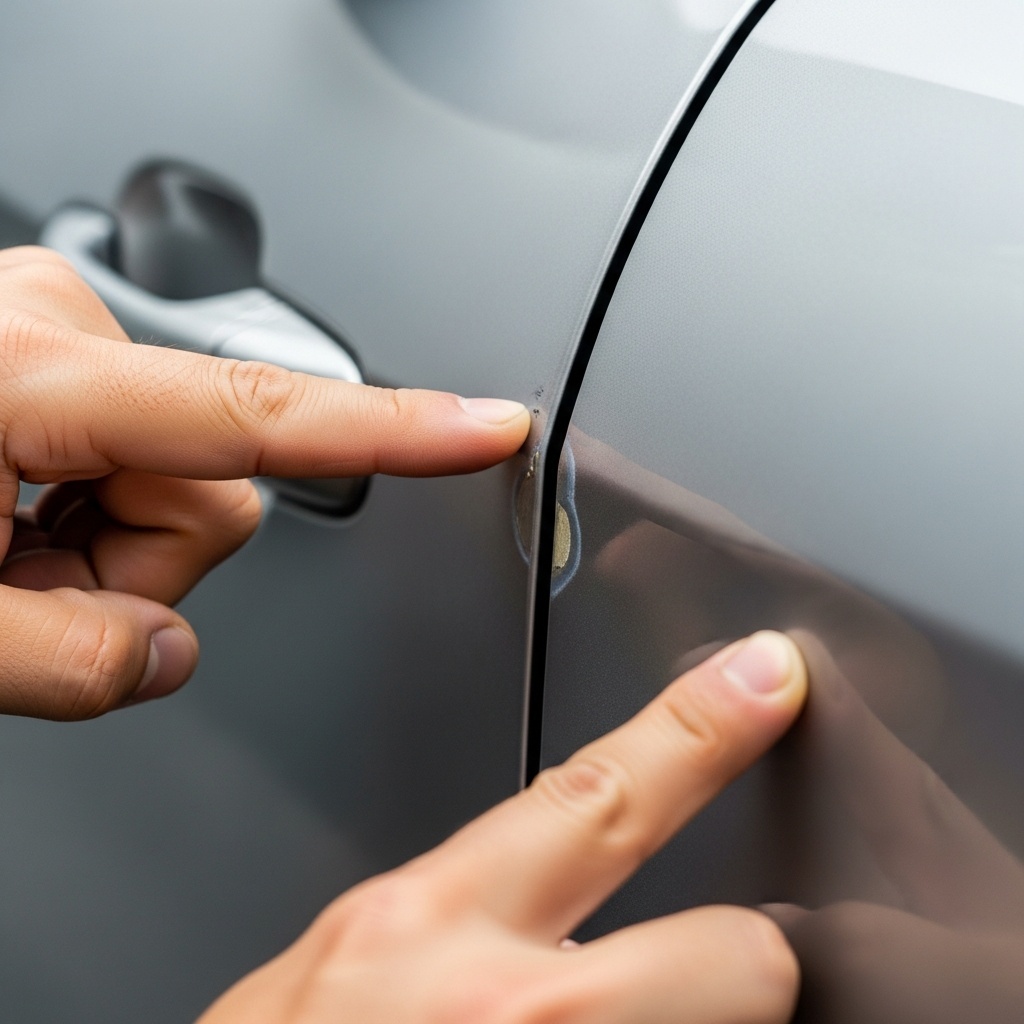
No database can replace putting your hands on the car. Check for:
- Paint thickness inconsistencies (a paint thickness gauge costs $20-$50 and is worth every penny)
- Uneven panel gaps between doors, fenders, hood, and trunk
- Mismatched paint tones, especially visible in direct sunlight
- Fresh undercoating that might be hiding rust or repair work
- Welding marks or sealer that doesn’t match factory application
- VIN stickers on doors and panels that don’t match or appear replaced
Step 4: Get a Pre-Purchase Inspection
Spend the $150-$300 on a professional pre-purchase inspection from an independent mechanic. They’ll put the car on a lift, check the frame for straightening marks, inspect for flood damage, and identify any structural concerns that even the best VIN report can’t reveal.
Carfax vs. Reality: A Comparison That Matters
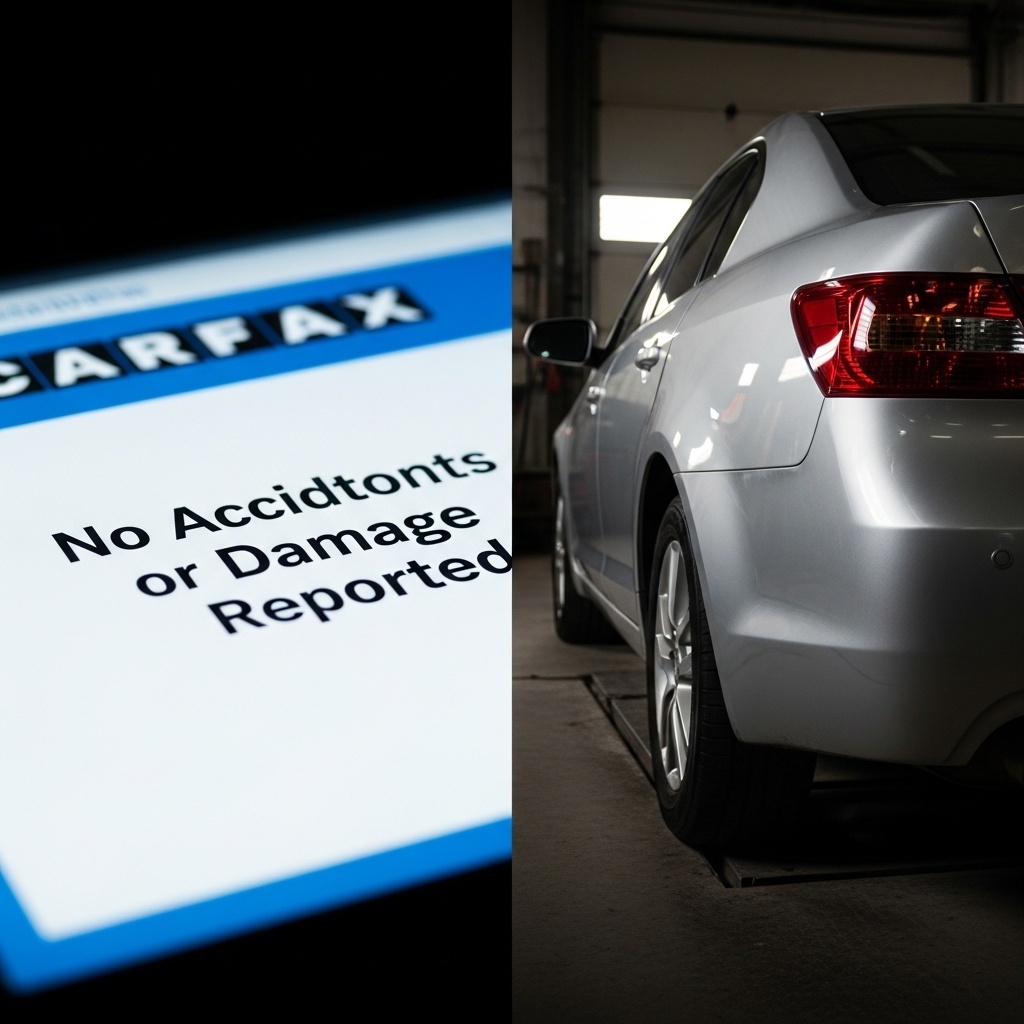
Here’s where things get real. Let’s compare what Carfax promises versus what it actually delivers when it comes to body shop repairs:
- Carfax claims: Access to billions of records from over 100,000 sources. Reality: Those sources skew heavily toward insurance companies, dealerships, and government agencies — not independent repair shops.
- Carfax claims: Comprehensive accident history. Reality: Only accidents that generate an insurance claim, police report, or involve a participating shop get captured.
- Carfax claims: “No accidents reported” badge. Reality: This means no accidents were reported to their database. It doesn’t mean no accidents occurred.
- Carfax claims: Detailed service history. Reality: Service records appear primarily from dealerships and participating facilities. Independent shop records are largely absent.
This isn’t meant to bash Carfax — their reports are genuinely useful and better than going in blind. But treating any single vehicle history report as infallible is a mistake that costs buyers real money. That’s why understanding Carfax’s strengths and limitations is so important.
Pro Tips From Someone Who’s Seen It All
After years of watching people get burned by hidden vehicle damage, here are a few tips that go beyond the basics:
- Check for paint work on brand-new used cars. If a “certified pre-owned” vehicle has been repainted — even one labeled as reconditioned on Carfax — something happened. Ask the dealer directly and watch their reaction.
- Look under the trunk carpet and floor mats. Wrinkled metal, mismatched sealant, or visible repair patches underneath indicate significant prior damage that someone went to great lengths to hide.
- Pull the vehicle’s records from multiple providers. CarfaxVINLookup.com offers a fast, reliable way to access detailed VIN reports that can catch what a single source misses.
- Ask for repair receipts. If the seller admits to body work, ask for the receipts. Reputable sellers keep records. Evasiveness is a red flag.
- Trust your gut. If a deal seems too good for the car’s apparent condition, there’s probably a reason. Walk away and find another one — there are always more cars.
- Bring a magnet. On older vehicles, body filler (Bondo) won’t attract a magnet the way bare metal does. Run a small magnet along body panels and note any spots where it doesn’t stick.
Frequently Asked Questions
Are body shops legally required to report repairs to Carfax?
No. There is no federal or state law that requires auto body repair shops to report their work to Carfax or any other vehicle history reporting service. Reporting is entirely voluntary, and the vast majority of independent shops do not participate.
Will going through insurance make my body repair show up on Carfax?
In most cases, yes. When you file an insurance claim for collision damage, the insurance company reports the claim to industry databases that Carfax monitors. The repair itself may not be detailed, but the fact that damage occurred and a claim was processed will typically appear on the vehicle’s history report.
Can I pay out of pocket to keep a repair off Carfax?
Paying for repairs out of pocket — without filing an insurance claim or involving a police report — significantly reduces the likelihood of the repair appearing on Carfax. However, it’s not a guaranteed method, as some shops or associated services might still share data. Additionally, a skilled inspector can often detect prior body work regardless of what any report says.
How can I tell if a car has had body work that wasn’t reported?
Look for physical signs: uneven paint finish, mismatched colors between panels, inconsistent panel gaps, overspray on trim or rubber seals, non-factory bolts or hardware, and irregular undercoating. A paint thickness gauge and a pre-purchase inspection by a professional are your best tools for catching unreported repairs.
Does Carfax show all accidents a car has been in?
No. Carfax shows accidents that were reported to their network of data sources — primarily through insurance claims, police reports, and participating repair facilities. Unreported accidents, out-of-pocket repairs, and work done at non-participating shops will not appear, even if the damage was significant.
Is a clean Carfax report enough to trust a used car?
A clean Carfax is encouraging, but it’s not sufficient on its own. Always supplement a vehicle history report with a physical inspection, a professional pre-purchase evaluation, and VIN checks through multiple services like CarfaxVINLookup.com to get the most complete picture of a vehicle’s past.
What’s the best way to check a car’s full history before buying?
Use a combination of approaches: run the VIN through multiple vehicle history report services, get a pre-purchase inspection from an independent mechanic, physically examine the car for signs of previous repair work, and verify the title status through your state’s DMV. This layered approach catches far more than any single method alone.
The Bottom Line
The reality is straightforward: most body shops do not report to Carfax, and there’s no law requiring them to. Carfax reports are built primarily on insurance claim data, police reports, and government records — not on information from the shops actually doing the repairs.
This doesn’t make Carfax useless. Far from it. A vehicle history report is still one of the smartest investments you can make before buying a used car. But it should be part of a broader strategy, not the whole thing.
Before you buy your next vehicle, take five minutes to run a VIN check at CarfaxVINLookup.com. You can also explore free VIN history check options to get started without spending a dime. Pair that with a physical inspection and a healthy dose of skepticism, and you’ll be in a much stronger position to spot the cars with hidden histories — and avoid the ones that could cost you dearly down the road.