

You’re shopping for a used car, you know you need a vehicle history report, and suddenly you’re staring at two options: Carfax and Bumper. One is the household name everyone’s heard of. The other is the newer alternative that promises similar results — sometimes at a lower price.
So which one do you actually use? Are they equally reliable? Does one catch things the other misses? Or is this a case where the brand name actually earns its reputation?
I’ve used both services extensively, and the answer isn’t as straightforward as either company’s marketing would have you believe.
Quick Verdict: Bumper vs. Carfax
Bumper is a solid vehicle history tool that works well for quick background checks, ownership lookups, and general vehicle data. It covers a lot of ground and offers a user-friendly experience at a competitive price point.
Carfax is stronger for in-depth accident history and dealership service records. Its insurance data pipeline and network of reporting dealerships give it an edge in the areas that matter most when you’re about to commit thousands of dollars to a purchase.
The best choice depends on what you need. For a quick overview before visiting a car? Bumper works fine. For a deep-dive before signing paperwork? Carfax provides more granular accident and service data. For the most complete picture? Use both — and supplement with a cheaper alternative to Carfax that can cross-reference multiple databases.
What Is Carfax?
Carfax is the oldest and most recognized vehicle history report service in the United States. Founded in 1984, it has spent decades building relationships with data providers — insurance companies, state DMVs, dealership networks, police departments, and auction houses.
Carfax reports cover:
- Accident history from insurance claims and police reports
- Title status and brand history (salvage, rebuilt, flood, lemon)
- Odometer readings and rollback alerts
- Service history from participating dealerships
- Ownership count and registration timeline
- Recall information from the National Highway Traffic Safety Administration (NHTSA)
- Auction records and fleet/rental usage
Carfax’s biggest advantage is its depth of insurance data. Because they’ve had data-sharing agreements with major insurance carriers for decades, their accident reporting is widely considered the most comprehensive in the industry. For a full picture of where Carfax sources all that data, the network is more complex than most buyers realize.
What Is Bumper?
Bumper is a newer vehicle data platform that positions itself as an affordable alternative to traditional vehicle history report services. It aggregates data from government records, public databases, and industry sources to produce vehicle reports.
Bumper reports typically include:
- Vehicle specifications and VIN decoding
- Title and registration history
- Accident records from available databases
- Ownership history
- Recall information
- Market value estimates
- Lien and loan status (where available)
- Sales history and listing data
Bumper’s appeal is its accessibility. The platform is designed to be easy to use, often offers subscription-based pricing that covers multiple reports, and includes some features — like market value and listing history — that Carfax doesn’t emphasize as prominently.
Bumper vs. Carfax: Side-by-Side Comparison
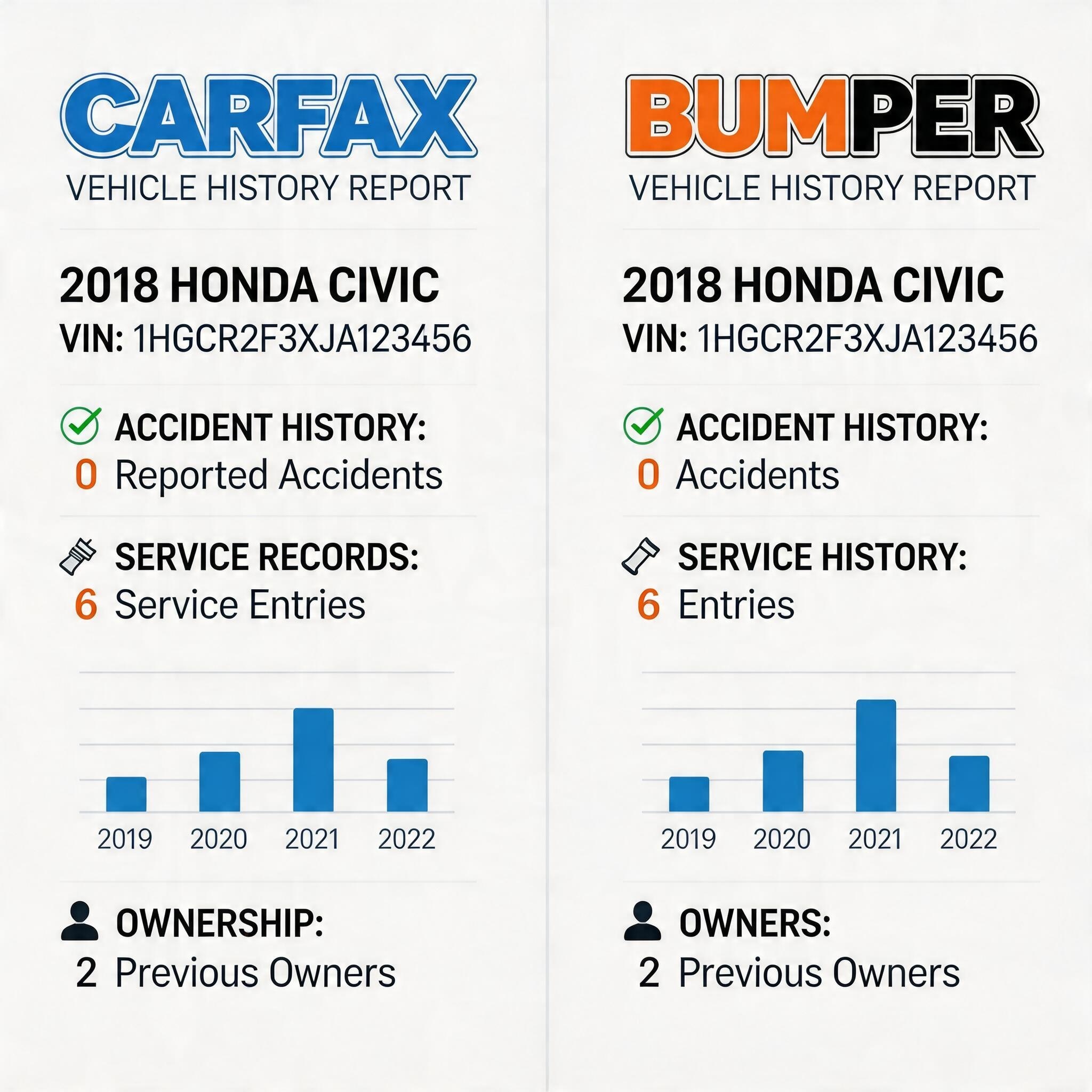
| Feature | Carfax | Bumper |
|---|---|---|
| Data Sources | 100,000+ (insurance, DMV, dealers, police, auctions) | Government records, public databases, NMVTIS data |
| Accident Data Depth | Strong — deep insurance claim integration | Moderate — relies on available public records |
| Service Records | Detailed — from franchise dealership network | Limited — less dealership integration |
| Title History | Comprehensive — all 50 states | Good — covers most state records |
| Pricing Model | Per-report or bundle (higher cost) | Subscription-based (more affordable for multiple checks) |
| Market Value Data | Basic — not a primary focus | Included — with listing and pricing history |
| Ease of Use | Familiar, established interface | Modern, user-friendly design |
| Brand Recognition | Industry standard — universally known | Growing — less established |
| Best Use Case | Deep pre-purchase investigation | Quick background checks, comparison shopping |
Deep Comparison: Where Each Service Stands
Data Quality and Depth
This is where Carfax maintains its strongest advantage. Decades of data-sharing agreements with insurance carriers mean that Carfax captures more accident detail — severity classifications, affected areas of the vehicle, repair costs in some cases — than most competing services.
Bumper pulls from legitimate sources, but its accident data tends to be thinner. You might learn that an accident was reported, but the detail about what happened, where, and how severe it was can be less specific. For a buyer trying to assess whether a fender bender was genuinely minor or potentially structural, that level of detail matters.
Service History Coverage
Carfax has a significant edge here. Thousands of franchise dealerships actively report service visits to Carfax — oil changes, brake jobs, recall repairs, warranty work. This creates a maintenance timeline that’s extremely valuable when evaluating how well a car was cared for.
Bumper doesn’t have the same depth of dealership service integration. You’ll get some maintenance data, but the granular visit-by-visit service log that Carfax provides from participating dealers is harder to match.
Title and Ownership Data
Both services perform well here. Title status, brand history, and ownership transfers are sourced primarily from state DMV records, which both Carfax and Bumper access. You should get reliable title information from either service, though Carfax’s longer history may occasionally surface older records that newer platforms haven’t indexed.
Pricing and Value
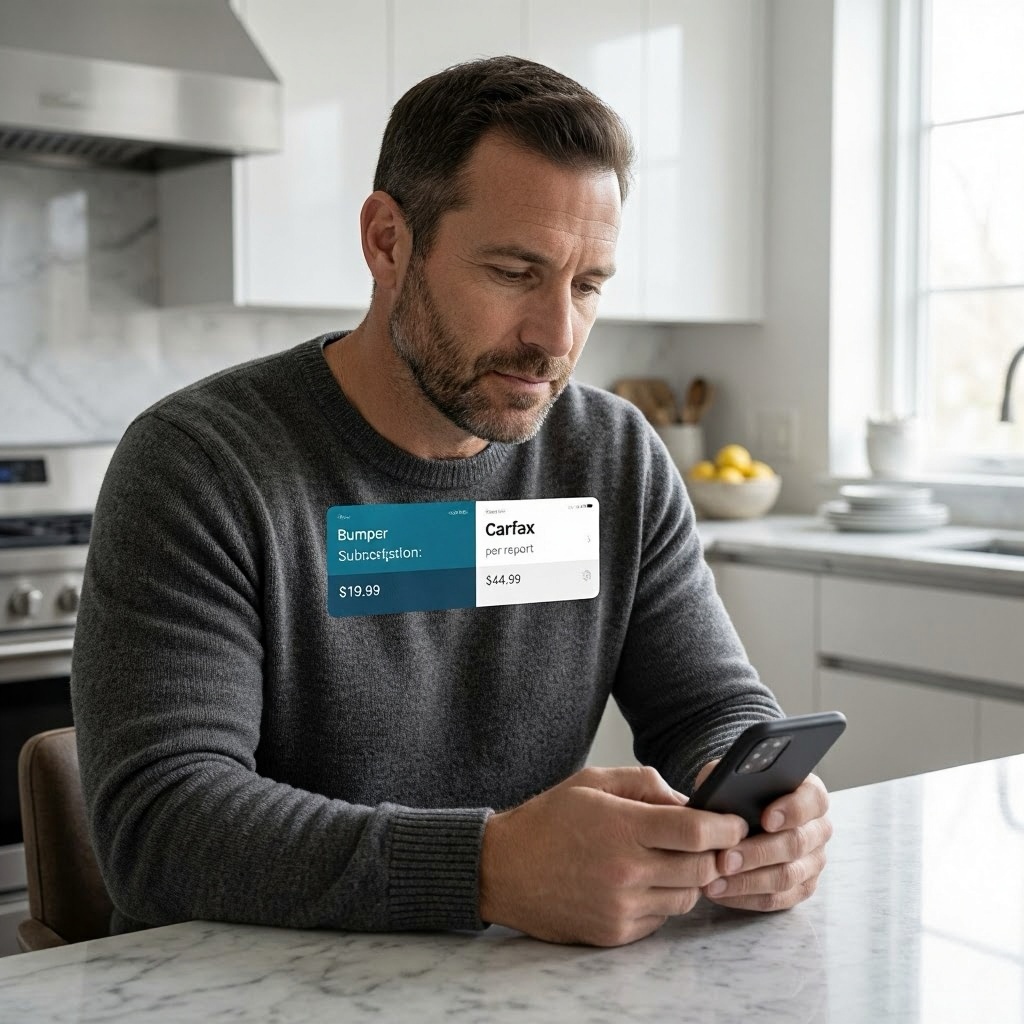
Bumper often wins on price, especially for buyers checking multiple vehicles. Their subscription model lets you run several reports for a flat fee, which makes sense if you’re in active shopping mode and evaluating a half-dozen cars before deciding.
Carfax charges more per report but delivers more depth per report. If you’re down to one or two serious candidates and need the most thorough investigation available, the premium may be justified.
Market and Pricing Data
Bumper includes market value estimates and listing history more prominently than Carfax. If you’re trying to determine whether a car is priced fairly relative to the market, Bumper’s data can be helpful. Carfax focuses less on pricing intelligence and more on historical events.
What Both Services Miss
Before choosing between Bumper and Carfax, understand that both share the same fundamental limitation: neither can report what was never reported to them. The clearest example of this is how body shops handle their repair records — most independent shops share nothing with any vehicle history service.
Events that typically evade both platforms:
- Out-of-pocket accident repairs with no insurance claim
- Work done at independent body shops that don’t share data
- Mechanical maintenance at independent mechanics
- Private settlements between drivers after accidents
- Mobile repair services (paintless dent removal, touch-up work)
- Some flood damage that was title-washed across state lines
This is why relying on any single vehicle history service — whether it’s Carfax, Bumper, or anything else — leaves gaps. The smartest approach is cross-referencing. Run the VIN through CarfaxVINLookup.com to access data across multiple sources and compare what different databases captured for the same vehicle.
When to Use Each Service
Use Carfax When:
- You’re in the final stages of a purchase decision and need maximum detail
- The vehicle’s accident history is your primary concern
- You want comprehensive dealership service records
- You’re buying from a dealer who provides Carfax as part of the sale
- The car’s price is high enough that the report cost is negligible by comparison
Use Bumper When:
- You’re in the early shopping phase and checking multiple vehicles
- Budget matters and you need several reports without paying per-vehicle Carfax rates
- You want market value and pricing data alongside history
- You’re doing a quick background check before scheduling a test drive
- You need basic ownership and title verification
Use Both When:
- You’re spending over $15,000 and want maximum confidence
- Something about the car’s history feels uncertain
- One report shows something the other might clarify further
- You’re comparing what different databases captured for the same VIN
Myth vs. Truth
Myth: Bumper has all the same data as Carfax, just cheaper.
Truth: Bumper accesses many of the same public data sources, but Carfax has proprietary data-sharing agreements — particularly with insurance companies and franchise dealerships — that give it access to information Bumper may not have. They overlap significantly, but they’re not identical.
Myth: Carfax is always worth the higher price.
Truth: Not always. If you’re in early shopping mode and checking ten cars, paying full Carfax rates for each is an expensive screening process. Bumper’s subscription model is more cost-effective for initial narrowing, and there are also ways to check a car’s history for free before committing to any paid service. Save the Carfax deep-dive for your top choices.
Myth: If both reports are clean, the car is definitely fine.
Truth: Two clean reports are better than one, but neither captures unreported events. Out-of-pocket repairs, independent shop work, and private incidents will be missing from both. Understanding what a clean report actually guarantees is the context every buyer needs before making decisions based on a report. A physical inspection remains essential regardless of how many reports you pull.
Myth: Newer services like Bumper are less trustworthy than Carfax.
Truth: Bumper pulls from recognized, legitimate data sources — government records, NMVTIS data, public databases. The data they provide is real. The difference isn’t trustworthiness — it’s coverage depth. Carfax has more private data agreements, not necessarily more honest data.
Myth: You only need one vehicle history service.
Truth: Different services access different databases. Running a VIN through multiple platforms — including CarfaxVINLookup.com — maximizes your chances of catching something that a single report missed. Think of it as getting a second opinion from a different doctor.
Pro Tips: How Smart Buyers Use Vehicle History Tools
- Layer your reports strategically. Use an affordable service like Bumper for initial screening, then run your top one or two candidates through Carfax and CarfaxVINLookup.com for maximum depth before making a commitment.
- Compare, don’t just collect. When you run the same VIN through different services, actually compare the results line by line. Discrepancies between reports are red flags worth investigating.
- No report replaces physical verification. Even if you run five different vehicle history reports, you still need a pre-purchase inspection from an independent mechanic and a hands-on examination of the car. Reports tell you what’s been documented. Inspections tell you what’s real right now.
- Use market value data wisely. If Bumper’s market estimate shows the car is overpriced relative to comparable vehicles, use that data in negotiation. Information is leverage.
- Check NHTSA separately for recalls. While both services include recall data, checking directly with NHTSA ensures you have the most current information, including any recently issued safety recalls that may not have propagated to third-party services yet.
Real-World Scenario: When the Reports Disagreed
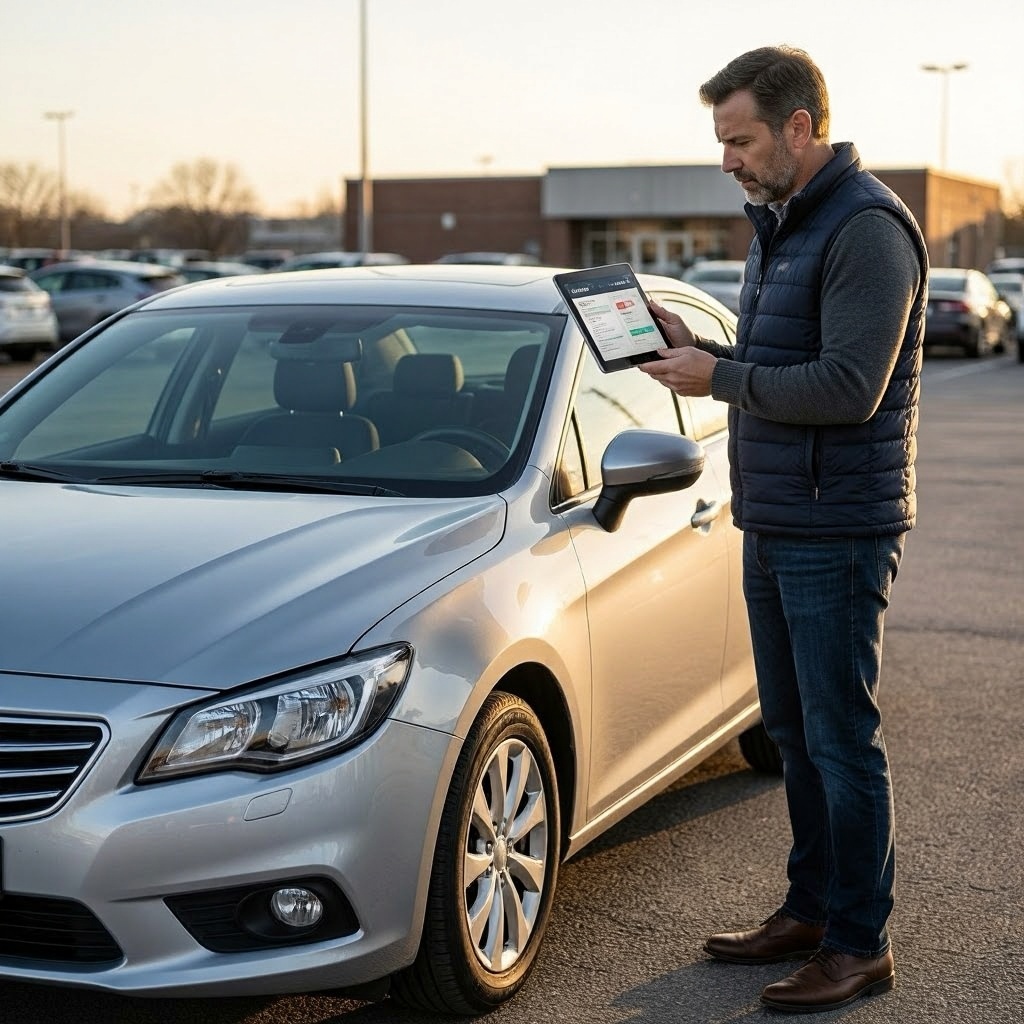
A buyer was considering a 2019 SUV. They ran Bumper first — everything came back clean. Title was clear, no accidents, ownership history looked normal. Feeling confident, they almost skipped the Carfax. But something about the price nagged them — it was $3,000 below comparable listings. A deal that good is often a signal that what one report missed, another might catch.
They ran the Carfax. An insurance claim for front-end damage appeared that Bumper hadn’t captured. The claim was tied to an insurance carrier whose data Carfax had access to but Bumper did not. The accident was classified as minor, but when the buyer inspected the vehicle, they found evidence of more extensive repair than “minor” suggested.
They walked away. The $45 spent on Carfax potentially saved them thousands.
Could the reverse happen — Bumper catching something Carfax missed? Theoretically, yes. Different sources, different data. Which is exactly why cross-referencing is the smartest play.
Frequently Asked Questions
Is Bumper as accurate as Carfax?
Bumper provides accurate data from the sources it accesses. However, Carfax has deeper integration with insurance companies and franchise dealerships, which often means more detailed accident and service records. Bumper’s accuracy is solid for what it covers, but coverage depth differs.
Is Bumper cheaper than Carfax?
Generally, yes. Bumper’s subscription model allows you to run multiple reports at a lower per-vehicle cost compared to Carfax’s single-report pricing. For buyers checking several cars, Bumper is more budget-friendly.
Can Bumper replace Carfax entirely?
For basic background checks and initial screening, Bumper can serve as a practical alternative. For high-stakes purchase decisions where maximum accident detail and dealership service records matter, Carfax still offers advantages that are difficult to fully replicate.
Should I use both Bumper and Carfax?
If the purchase is significant — and most car purchases are — using both is a smart investment. Different services access different data, and cross-referencing reports maximizes your chances of uncovering everything that’s been documented about the vehicle.
Which is better for checking accident history?
Carfax generally provides more detailed accident information due to its direct agreements with insurance carriers. The severity, location of damage, and type of incident are often more thoroughly described in Carfax reports compared to what Bumper provides.
Does Bumper show service records like Carfax?
Bumper includes some maintenance data, but it doesn’t have the same depth of franchise dealership reporting that Carfax provides. If a complete service history is important to your purchase decision, Carfax is the stronger option in this area.
What’s the best way to check a vehicle’s history?
Use multiple vehicle history services — including CarfaxVINLookup.com — to cross-reference data, then follow up with a professional pre-purchase inspection. No single report covers everything, but multiple reports combined with a hands-on inspection come as close to complete as possible.
The Bottom Line
Is Bumper as good as Carfax? It depends on what you mean by “good.” For quick, affordable background checks on multiple vehicles, Bumper holds its own and offers genuine value. For the deepest possible accident detail and comprehensive service records, Carfax still leads. If cost is a factor in choosing between them, a full breakdown of Carfax pricing can help you decide which plan makes sense for your situation.
The real answer? Neither one alone is good enough. The smartest buyers don’t pick sides — they use multiple tools. Run the VIN through Bumper for a cost-effective overview. Run it through Carfax for insurance-reported detail. And use CarfaxVINLookup.com to cross-reference across databases and catch what any single report might miss.
Then do what no report can do for you: put the car on a lift, inspect it in person, and let a trusted mechanic tell you what the data can’t. That’s how you buy a used car with confidence — not by trusting one report, but by trusting the full picture.