
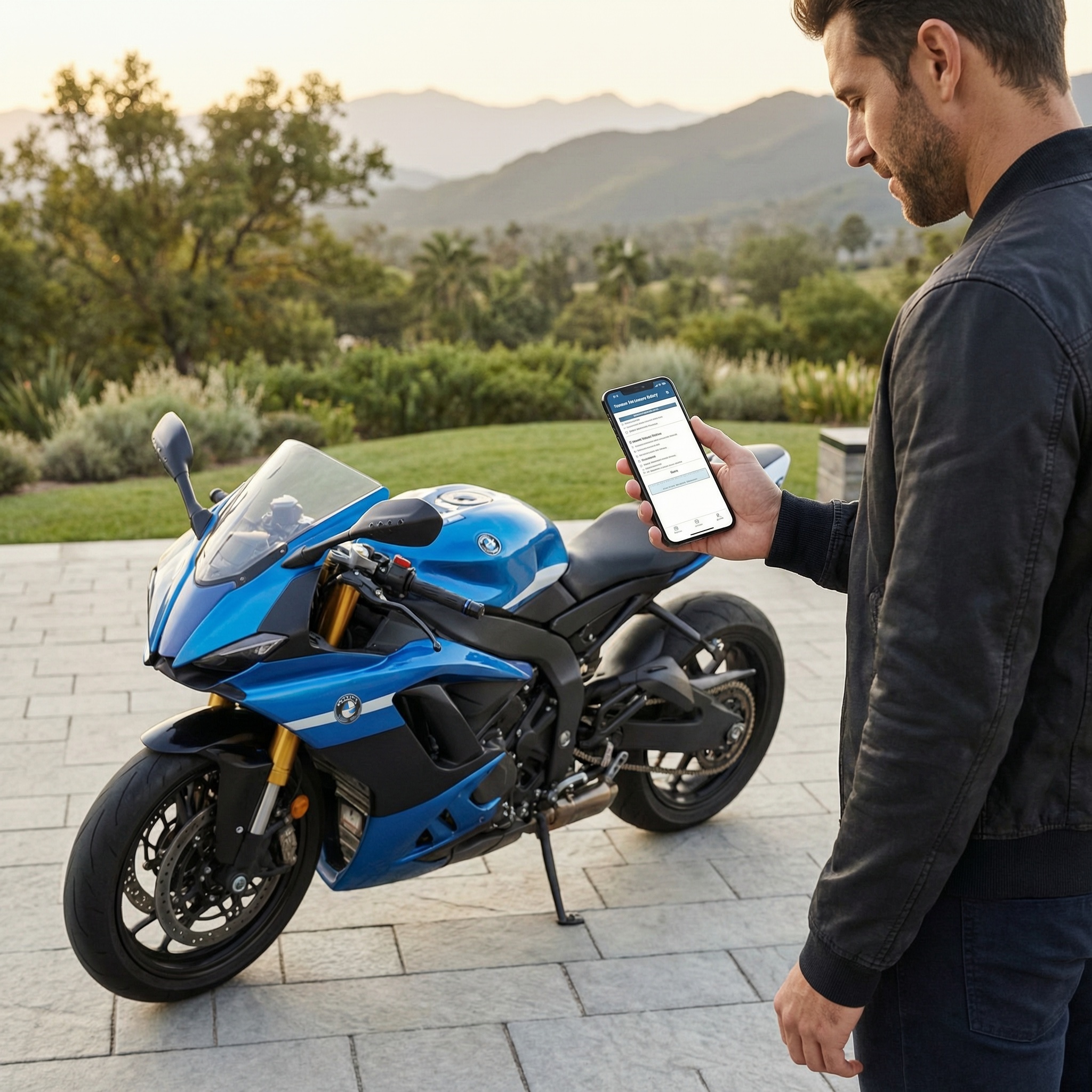
You’ve found a used motorcycle that looks perfect. The price is right, the photos look clean, and the seller seems legit. But before you hand over the cash, one thought stops you cold — the same thought every smart buyer has with cars: can I run a Carfax on this thing?
If you’ve ever bought a used car, you know how valuable a vehicle history report can be. It catches accidents, title issues, odometer problems, and hidden damage that sellers conveniently forget to mention. Naturally, you want the same protection when buying a motorcycle.
But does Carfax even work for motorcycles? And if it does, how well does it actually work compared to car reports?
Quick Answer: Is There a Carfax for Motorcycles?
Yes — Carfax does offer reports for motorcycles. If the motorcycle has a standard 17-character VIN (Vehicle Identification Number), you can run it through Carfax just like a car. The report will pull whatever data exists in their system for that VIN, including title history, reported accidents, ownership records, and any available service data.
However, motorcycle reports are typically much less detailed than car reports. The data network that feeds Carfax — insurance companies, dealership service centers, inspection stations — reports far less motorcycle-specific information than it does for cars. So while you can technically run a Carfax on a motorcycle, the report you get may be significantly thinner than what you’d expect from a car report.
That doesn’t mean it’s useless — it just means you need a different strategy for checking a motorcycle’s history.
Why Motorcycle History Reports Have Less Data Than Cars
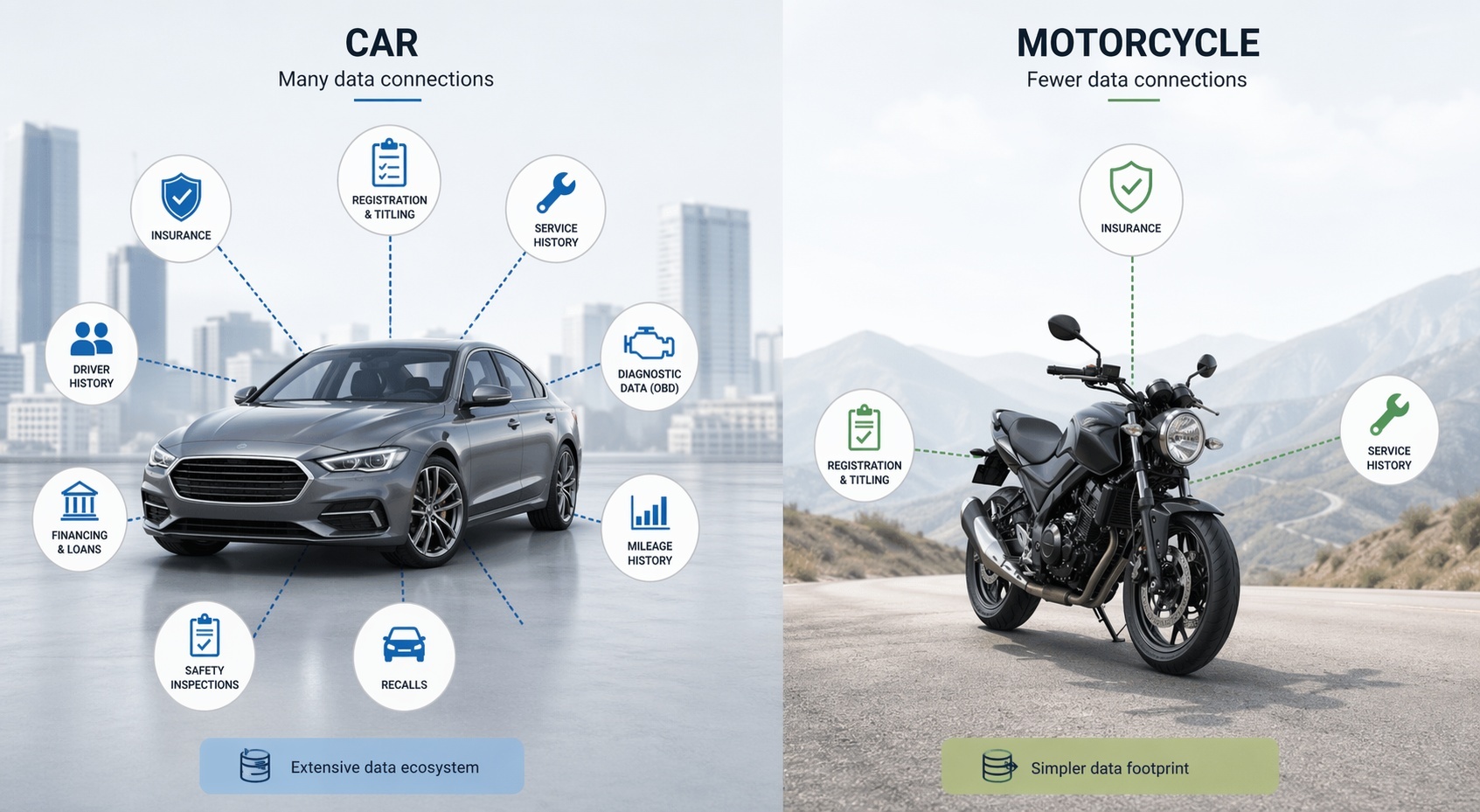
Understanding why motorcycle reports are thinner than car reports comes down to how data flows into vehicle history systems. The infrastructure was built around cars and trucks, and motorcycles simply don’t generate as many reporting touchpoints.
Fewer Insurance Claims Are Filed
Insurance is the primary source of accident data on any vehicle history report. But motorcycle insurance operates differently than auto insurance. In some states, motorcycle insurance is less comprehensive by default. Many riders carry liability-only coverage, meaning damage to their own bike doesn’t generate a claim at all. A motorcycle could be dropped, lowsided, or involved in a collision, and if the rider only carries liability coverage, no claim gets filed and no data enters the system.
Fewer Dealership Service Visits
Car owners frequently service their vehicles at franchise dealerships, which report to Carfax. Motorcycle owners? Many do their own maintenance. Oil changes, chain adjustments, brake pads, air filters — a significant number of riders handle this work in their garage. Even those who use professional mechanics tend to go to independent motorcycle shops that don’t participate in Carfax’s reporting network.
Less State Inspection Data
Many states require annual safety or emissions inspections for passenger vehicles — and those inspections generate odometer readings and pass/fail records that Carfax captures. Motorcycles are exempt from inspection requirements in numerous states, which means fewer data points entering the system.
Lower Auction Volume
A massive amount of used car data comes from wholesale auctions like Manheim and ADESA. While motorcycles do pass through auctions, the volume is dramatically lower than passenger vehicles. Fewer auction transactions mean fewer condition reports, fewer inspection records, and less data flowing to Carfax.
Smaller Reporting Network
The bottom line is that motorcycles interact with fewer data-reporting institutions throughout their lives. They’re registered with DMVs (that data is captured), but beyond title and registration events, the touchpoints that generate rich vehicle history data are far less frequent for motorcycles than for cars.
What You Can Expect From a Motorcycle Carfax Report
Even with the limitations, a Carfax report on a motorcycle can still provide valuable information. Here’s what you’ll typically find — and what you probably won’t.
What You’ll Usually See
- Title history — Ownership transfers, title brands (salvage, rebuilt, etc.), and state of registration
- Odometer readings — From DMV records captured at title transfer
- Theft records — If the motorcycle was reported stolen
- Insurance total loss records — If the bike was declared a total loss
- Recall information — Open recalls from NHTSA
- Registration events — Where and when the bike was registered
What You’ll Often Be Missing
- Detailed accident history — Unless a claim was filed with a participating insurer, collision data is scarce
- Service records — Most motorcycle maintenance happens at independent shops or in garages, neither of which report to Carfax
- Damage severity details — Even when an incident is reported, the level of detail on motorcycle damage tends to be less granular
- Modification history — Aftermarket parts, engine swaps, and performance modifications aren’t tracked
- Drop and tip-over incidents — These common motorcycle events rarely generate any reportable data
Carfax for Cars vs. Motorcycles
| Feature | Cars | Motorcycles |
|---|---|---|
| Title History | Comprehensive | Comprehensive |
| Accident Data | Detailed (insurance, police, shops) | Limited (fewer claims filed) |
| Service Records | Often detailed (dealer network) | Rarely available |
| Odometer Verification | Multiple data points | Fewer data points (mainly DMV) |
| Recall Information | Included | Included |
| Theft Records | Included | Included |
| Inspection Data | Available in many states | Rarely available |
| Overall Report Depth | Rich and detailed | Basic to moderate |
The title and registration data is equally strong for both. The gap shows up in accident detail, service history, and the overall depth of the report.
Alternatives to Carfax for Motorcycle History
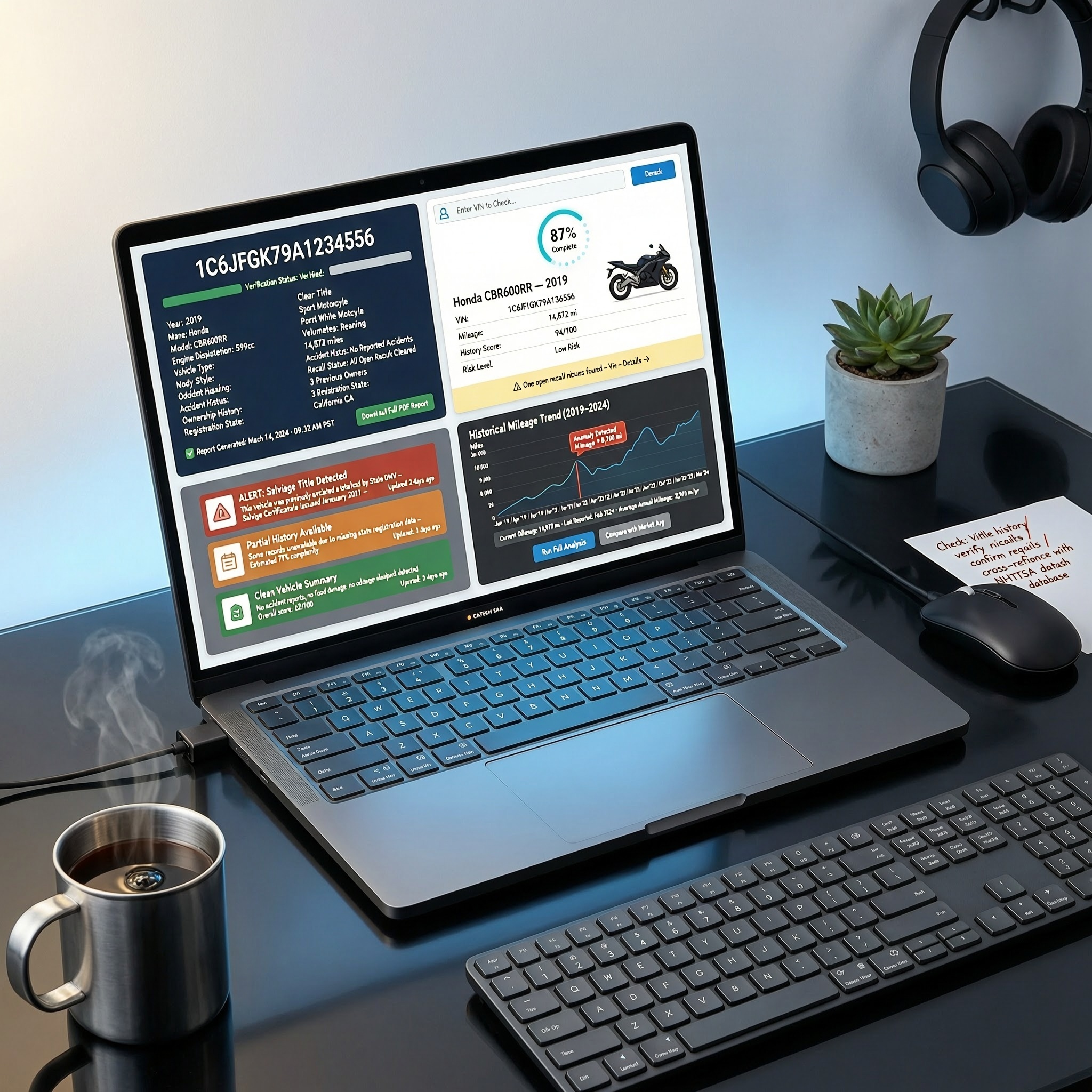
Given the limitations of car-focused vehicle history services for motorcycles, smart buyers use additional tools and resources to build a more complete picture.
NICB VINCheck
The National Insurance Crime Bureau offers a free VIN lookup that checks for theft and salvage records. It’s a quick, no-cost starting point for any motorcycle purchase and can catch stolen bikes or previously totaled motorcycles.
NMVTIS-Based Services
The National Motor Vehicle Title Information System is a federal database that tracks title and brand history. Several approved providers offer NMVTIS reports at low cost, and these reports are particularly useful for catching title brands (salvage, rebuilt, flood) that might be missing from other services.
CarfaxVINLookup.com
A comprehensive VIN check lets you run reports that pull from multiple databases. For motorcycles, cross-referencing several data sources is even more important than for cars because no single service captures everything. Using a tool that aggregates across sources gives you the best shot at a complete picture.
Manufacturer VIN Lookup Tools
Some motorcycle manufacturers — Harley-Davidson being the most notable — offer VIN lookup tools on their websites that provide production details, original specifications, and sometimes recall and warranty information. These are manufacturer-specific but can verify that the bike matches its claimed specs.
State DMV Title Search
Many states allow you to run a title check through their DMV website or office. This confirms current title status, lien information, and registered owner — critical information when buying privately.
How to Properly Check a Motorcycle’s History Before Buying
Because motorcycle history data is thinner, you need to compensate with a more hands-on approach. Here’s the process experienced motorcycle buyers follow.
Step 1: Run the VIN Through Multiple Services
Start with CarfaxVINLookup.com for a comprehensive VIN check. Then verify against NICB for theft/salvage records and your state’s DMV for title status. Each source catches different things.
Step 2: Physically Inspect the VIN
Verify the VIN on the motorcycle’s steering neck (headstock) matches the title and registration. Check that the VIN plate hasn’t been tampered with, replaced, or shows signs of alteration. VIN fraud happens with motorcycles more than most buyers realize.
Step 3: Inspect for Crash Damage
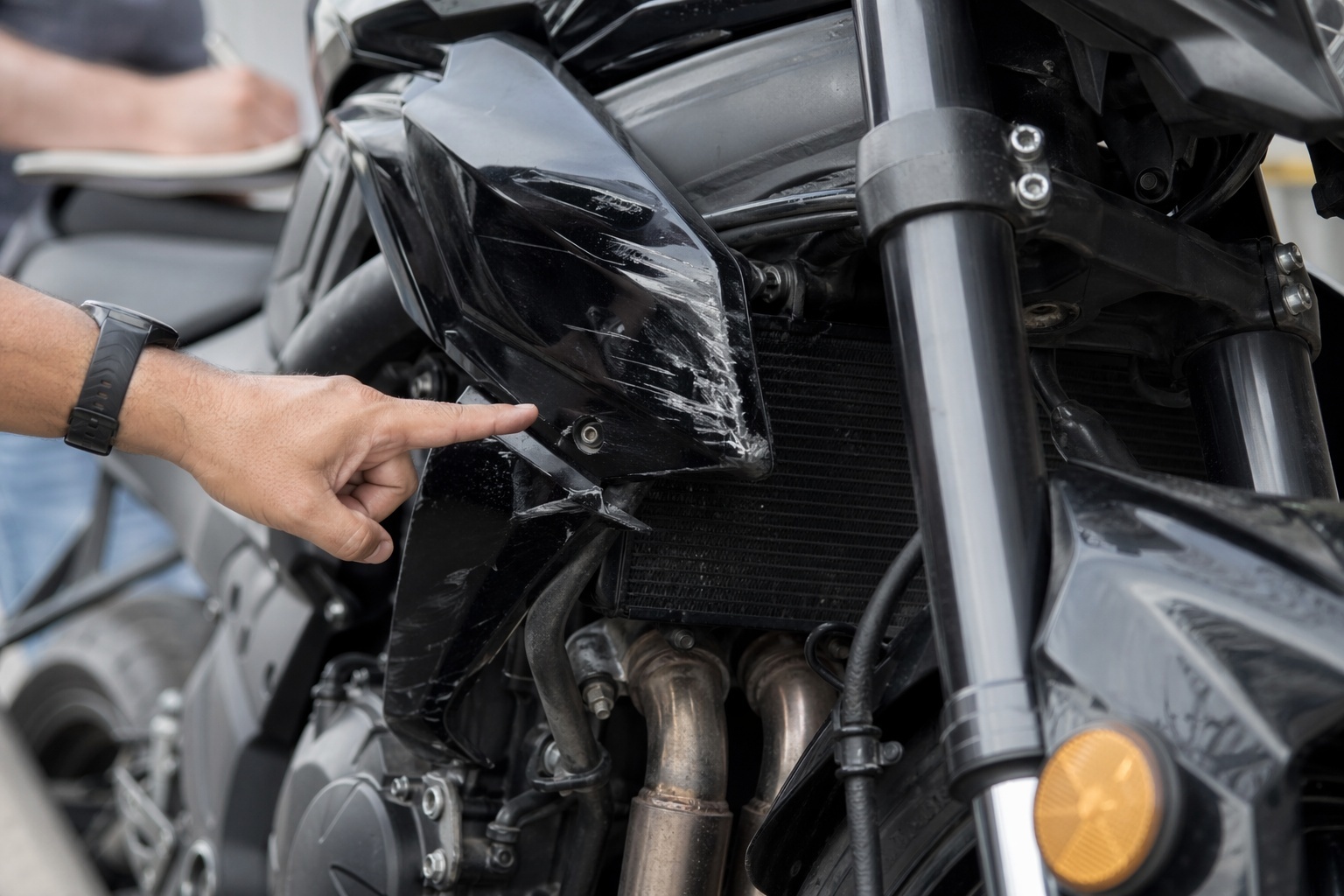
Motorcycles show crash evidence differently than cars. Look for:
- Scratches or scrapes on bar ends, levers, foot pegs, and engine covers — signs of a drop or lowside
- Bent or replaced handlebars, clipons, or rearsets
- Misaligned forks or triple tree
- Cracked or replaced fairings that don’t match the bike’s paint perfectly
- Bent subframe or swingarm
- Fresh powder coating or paint on the frame — which may be hiding repair work
- Aftermarket crash protection (frame sliders, engine guards) installed retroactively — sometimes installed to disguise existing damage
Step 4: Check the Maintenance Essentials
Since service records rarely appear on history reports for motorcycles, check the bike yourself or bring a mechanic. Inspect chain/sprocket wear, brake pad thickness, tire condition and age (check DOT date codes), fluid condition, and valve adjustment records if the bike has maintenance-interval valves.
Step 5: Ask for Documentation
Sellers who genuinely maintained their motorcycles tend to keep receipts. Ask for oil change records, tire purchase receipts, any shop invoices, and warranty paperwork. A well-kept motorcycle usually comes with a folder of documentation. No records at all? Proceed with extra caution.
Myth vs. Truth
Myth: You can’t run a Carfax on a motorcycle.
Truth: You can — as long as the motorcycle has a 17-character VIN. The report may have less data than a car report, but it will still show title history, registration events, theft records, and any insurance-reported incidents.
Myth: If nothing shows up on a motorcycle VIN check, it’s definitely clean.
Truth: Given how little motorcycle data enters reporting databases, a clean VIN report for a motorcycle means even less than a clean report for a car. Many drops, crashes, and repairs never get reported. Physical inspection is far more important for motorcycles than for cars.
Myth: Motorcycle history reports are useless because they have so little data.
Truth: Even a basic report can catch critical issues — stolen bikes, salvage titles, odometer discrepancies, and total loss records. Catching any one of these problems justifies the cost of the report many times over.
Myth: Only cars get salvage titles, not motorcycles.
Truth: Motorcycles absolutely receive salvage and rebuilt title brands. A motorcycle declared a total loss by an insurance company follows the same titling process as a car. And because motorcycle repairs can be done cheaply in a garage, rebuilt-title bikes are common in the used market.
Pro Tips for Motorcycle Buyers
- Check online forums and owner communities. Motorcycle communities are tight-knit. Searching the VIN or the seller’s username on forums like ADVRider, Reddit motorcycle subs, or brand-specific communities sometimes surfaces the bike’s history from previous owners who posted about it.
- Look at the fasteners. Factory bolts on Japanese motorcycles typically have clean, unscratched hex heads. If you see rounded bolt heads, stripped screws, or mismatched fastener types, the bike has been worked on — possibly after damage.
- Check frame and swingarm welds. Factory welds are consistent and clean. Any sign of grinding, re-welding, or filler material on the frame is evidence of crash repair that no VIN report will ever show.
- Pull the seat and inspect underneath. Sellers detail the visible parts. Under the seat, behind fairings, and inside the tail section often tell a different story about the bike’s condition and history.
- Run the VIN through CarfaxVINLookup.com before meeting the seller. Knowing the bike’s title status and any reported history before you arrive puts you in a stronger negotiating position and helps you ask the right questions.
Frequently Asked Questions
Does Carfax work for motorcycles?
Yes. Carfax can generate reports for motorcycles with a standard 17-character VIN. The report will include title history, registration data, theft records, and any insurance-reported incidents. However, the detail level is typically less than what you’d see on a car report.
Why are motorcycle Carfax reports less detailed than car reports?
Motorcycles generate fewer reporting touchpoints. Riders often carry minimal insurance, use independent mechanics, and many states don’t require motorcycle inspections. This results in less data flowing into Carfax’s system compared to the extensive network that captures car data.
What’s the best way to check a motorcycle’s history?
Use a multi-source approach: run the VIN through CarfaxVINLookup.com, check NICB for theft and salvage records, verify title status with your state DMV, and physically inspect the motorcycle for crash evidence. No single source catches everything for motorcycles.
Can a motorcycle have a salvage title?
Yes. When an insurance company declares a motorcycle a total loss — typically when repair costs exceed a certain percentage of the bike’s value — it receives a salvage title. If it’s later repaired and passes inspection, it can be re-titled as rebuilt. Both brands will appear on VIN checks.
Are there free motorcycle VIN check tools?
NICB’s VINCheck is free and checks for theft and salvage records. NHTSA offers free recall lookups by VIN. For more comprehensive reports including title history and accident data, paid services like CarfaxVINLookup.com provide significantly more detail. You can also review what vehicle history data is actually available for free before deciding how much to spend.
How do I know if a motorcycle was in a crash?
Physical inspection is more reliable than reports for motorcycles. Look for scraped bar ends, replaced levers, mismatched fairings, bent handlebars, frame scratches, and re-welded components. Check the VIN report for insurance claims, but understand that many motorcycle crashes go unreported.
Do older motorcycles have VINs that work with Carfax?
Motorcycles manufactured before 1981 may have shorter VINs that don’t conform to the current 17-character standard. Carfax requires a 17-character VIN to generate a report. For older bikes, you’ll need to rely on state DMV records, physical inspection, and community knowledge to verify history.
The Bottom Line
Yes, there is a Carfax for motorcycles — it’s Carfax itself. The same service that covers cars can pull reports for any motorcycle with a standard 17-character VIN. But the report you get will likely be leaner than what you’re used to seeing for cars, because motorcycles simply don’t generate as much reportable data throughout their lives.
That doesn’t mean you should skip the VIN check. Even a basic report can catch salvage titles, theft records, and insurance total loss history — any one of which would be a dealbreaker you don’t want to discover after paying.
Start by running the motorcycle’s VIN through CarfaxVINLookup.com for a comprehensive check. Then supplement with physical inspection, seller documentation, and community research. For motorcycles more than any other vehicle type, your eyes, hands, and a knowledgeable mechanic are the most important diagnostic tools you have.