

You pulled a Carfax report. Everything looked good — clean title, regular oil changes, single owner — and then you saw it. “Minor Damage.” Two words that instantly made you question the entire car.
Now you’re wondering: is this a dealbreaker? Is the car hiding something dangerous? Or are you about to walk away from a solid vehicle because of a bumper scratch that happened in a Costco parking lot three years ago?
Let’s cut through the anxiety and get to the truth.
Quick Verdict: Is Minor Damage on Carfax Bad?
Not necessarily. In most cases, minor damage on a Carfax report refers to low-severity cosmetic issues — dents, scratches, scuffed bumpers, or similar surface-level incidents. These are extremely common on used vehicles and typically have no impact on safety, reliability, or drivability.
It’s not bad if: the damage was cosmetic, properly repaired, and the rest of the vehicle’s history is clean.
It could be bad if: the “minor” classification doesn’t match the physical evidence, the seller can’t explain what happened, or you find signs of deeper structural work during inspection.
The entry itself isn’t the problem. What matters is what’s behind it — and whether you take the right steps to find out.
What Does “Minor Damage” Mean on a Carfax Report?
Carfax uses a three-tier damage classification system: minor, moderate, and major. These categories come from data reported by insurance companies, repair facilities, and law enforcement — not from Carfax inspecting the vehicle themselves. For context on how Carfax collects this data, the reporting pipeline explains why some incidents appear and others never do.
Minor damage generally means the incident involved low-speed impact, cosmetic harm, or small-scale repair work. The vehicle remained drivable, no airbags deployed, and the structural integrity wasn’t compromised.
Common examples of what gets classified as minor damage:
- Parking lot door dings
- Bumper scuffs from low-speed contact
- Paint scratches and key marks
- Cracked or chipped windshield
- Hail dents across body panels
- Shopping cart impact damage
- Side mirror replacement
- Minor fender bender at a stoplight
If you drive any car for five years in a busy city, there’s a decent chance it’ll pick up at least one of these. Minor damage is the most common type of incident on used vehicle history reports — by a wide margin.
When Minor Damage on Carfax Is NOT a Problem
Here are the scenarios where that Carfax entry should barely register as a concern:
- The damage was purely cosmetic — a scratch, dent, or scuff that affected only the surface finish and required no structural repair.
- It was professionally repaired — work done at a certified collision center, dealership, or reputable body shop with documentation.
- The car passes a pre-purchase inspection — an independent mechanic confirms no lingering issues related to the reported damage.
- The seller provides full transparency — they know what happened, can describe it, and aren’t dodging your questions.
- The repair cost was low — insurance claims under $1,500–$2,000 for “minor damage” align with truly cosmetic work.
- No other red flags exist — the title is clean, ownership history makes sense, and the service record is consistent.
A used car with a single minor damage entry and an otherwise spotless history? That’s arguably one of the safest used car purchases you can make. You know exactly what happened, it was small, and it was addressed.
When Minor Damage on Carfax IS a Problem
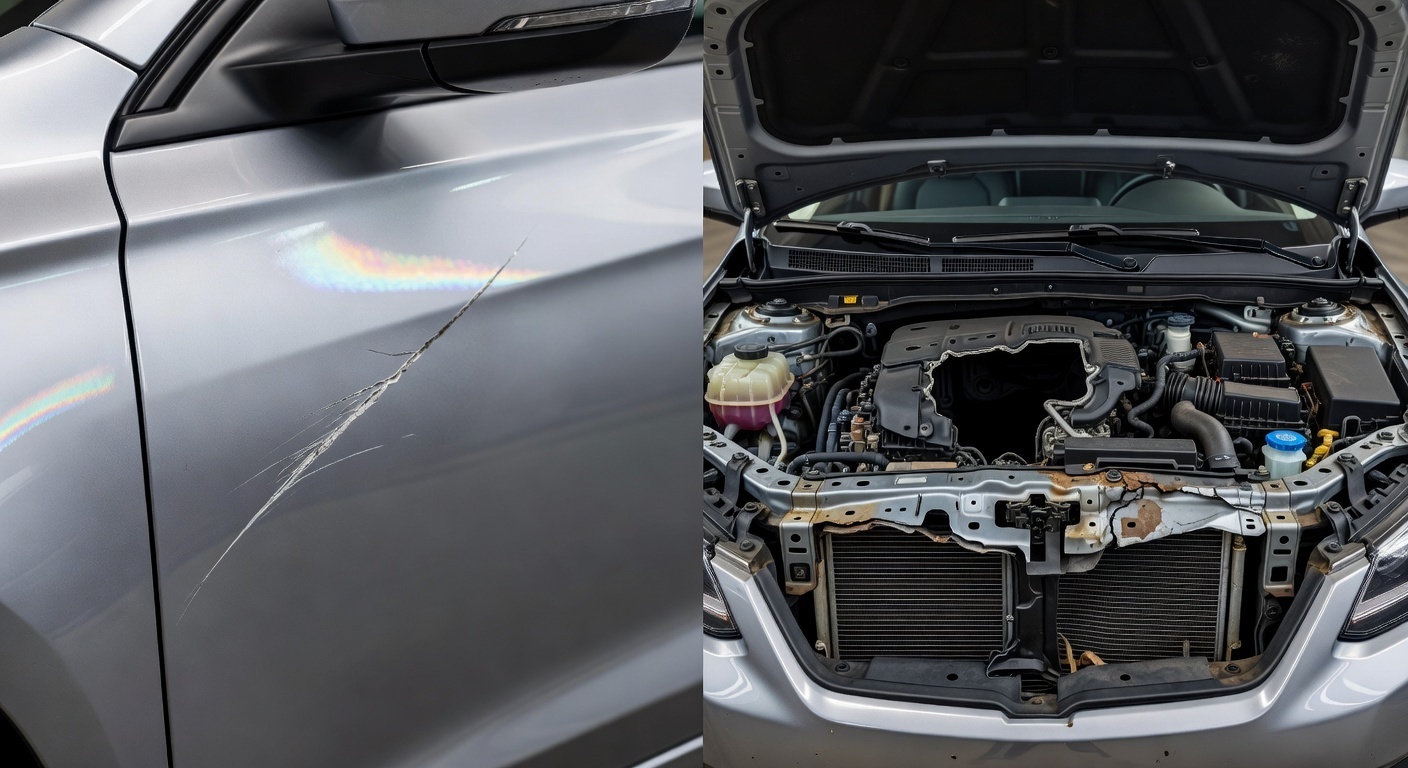
Minor damage deserves real scrutiny when any of these conditions are present:
- Physical evidence doesn’t match “minor” — you notice significant paint differences, poor panel alignment, or evidence of structural welding. What was reported as minor may have been worse than categorized.
- The damage involved the front end — front impacts, even at low speed, can affect the radiator support, condenser, bumper reinforcement bar, and sensors that are expensive to properly repair.
- There are multiple minor damage entries — one minor incident is life. Three or four suggests a pattern — either the car has been in unlucky situations or it’s been through auction channels where classification can be generous.
- The seller is evasive or uninformed — “I don’t know, it was like that when I got it” is a red flag when combined with a damage report.
- No repair documentation exists — if damage was reported but there’s no record of it being fixed, you could be looking at unrepaired damage or a cash repair with no quality oversight.
Damage Severity Comparison
| Category | Minor Damage | Moderate Damage | Major Damage |
|---|---|---|---|
| Severity | Low — cosmetic or surface-level | Medium — panel or component damage | High — structural or safety-critical |
| Common Examples | Dents, scratches, bumper scuffs | Replaced panels, bent components | Frame damage, airbag deployment |
| Repair Cost Range | $300–$2,000 | $2,000–$8,000 | $8,000+ |
| Safety Concern | Minimal | Possible | Significant |
| Resale Value Hit | 5–15% | 15–30% | 30–50%+ |
| Title Impact | None — clean title | Rarely branded | Often salvage/rebuilt |
As this table shows, minor damage sits at the lowest end of the severity spectrum. The gap between “minor” and “major” is massive — and treating them with the same level of concern means either overpaying for caution or underestimating real risk. For a practical guide on whether to buy a car with minor damage, real-world inspection experience makes the case clearly.
How Minor Damage Impacts Resale Value

Let’s be straightforward: yes, a minor damage entry on Carfax will reduce the vehicle’s resale value. But the reduction is smaller than most people expect.
On average, a single minor damage report drops a vehicle’s market value by 5% to 15%. On a $25,000 car, that’s $1,250 to $3,750. The exact figure depends on the vehicle’s age, overall condition, local market demand, and how many competing clean-history examples are available.
Here’s the part that gets overlooked: if you bought the car at a discount because of the damage report, the resale hit is already priced in. You paid less going in, and you’ll sell for proportionally less going out. The net impact on your ownership cost is often close to zero.
Where it does sting is if you paid full market price for a car with minor damage on Carfax. In that case, you overpaid, and you’ll lose the difference when you sell. Always negotiate based on the vehicle’s documented history.
Insurance: Does Minor Damage on Carfax Affect Your Coverage?
For the most part, no. Insurers don’t penalize you for a vehicle’s prior minor damage history. Your premiums are calculated based on the car’s make, model, year, your location, your driving record, and coverage selections — not on a parking lot dent from 2022.
That said, according to the Insurance Information Institute, insurers may note pre-existing damage during underwriting. If you later file a claim involving the same area of the vehicle, they could dispute whether the damage is new or pre-existing. It’s rare with genuinely minor cosmetic damage, but it’s worth documenting the car’s current condition with photos when you purchase it.
Real-Life Examples That Put It in Perspective
Example 1: The Non-Issue
A 2022 Mazda CX-5 shows “Minor Damage — Right Side” on Carfax. The previous owner filed an insurance claim after someone opened their car door into the CX-5 at a parking garage. Claim amount: $850 for paintless dent removal and touch-up. The car drives perfectly, passes inspection with flying colors, and is priced $1,800 below similar listings without damage reports.
Is this bad? No. This is a textbook example of minor damage that means nothing functionally. You’re saving money on a car that had a door ding fixed professionally.
Example 2: The Red Flag
A 2021 Nissan Altima shows “Minor Damage — Front” on Carfax. During your inspection, you notice the hood gaps are uneven, one headlight assembly looks newer than the other, and a paint thickness gauge shows the front bumper and left fender are significantly thicker than the right side. The seller says they “don’t have details.”
Is this bad? Probably. The physical evidence suggests the damage was more than minor. The mismatch between the report and reality — combined with a seller who can’t explain it — makes this a car to avoid.
Myth vs. Truth
Myth: Any damage on Carfax means the car is a lemon.
Truth: Minor damage is incredibly common on used cars. A single cosmetic incident doesn’t make a vehicle unreliable, unsafe, or a bad investment. Context — not just the existence of an entry — determines whether it matters.
Myth: Minor damage always gets worse over time.
Truth: Properly repaired cosmetic damage doesn’t deteriorate. A professionally fixed bumper or repainted panel will last for the life of the vehicle. Poor-quality repairs can develop issues, which is why inspecting repair quality matters more than the damage itself.
Myth: A clean Carfax is always better than one with minor damage.
Truth: A car with documented minor damage and a transparent history can actually be more trustworthy than a car with a suspiciously clean report. At least you know what you’re dealing with. A “clean” Carfax might just mean no one filed a claim — not that nothing ever happened. And since most independent body shops don’t report repairs to Carfax, plenty of repaired cars carry spotless histories.
Myth: You can’t get a good deal on a car with minor damage.
Truth: The opposite is true. Cars with minor damage reports are often the best deals on the market because nervous buyers avoid them. If you do your homework and verify the car’s condition, you can capitalize on their hesitation.
Pro Tips for Handling Minor Damage on Carfax
- Always check the damage location. Rear cosmetic damage is the least concerning. Front-end damage — even classified as minor — deserves more investigation because of the sensors, cooling systems, and structural components hidden behind that bumper.
- Cross-reference with a second VIN report. Run the vehicle through a service that lets you check a car’s history online to see if additional databases captured details that a single source missed. Different providers sometimes record different severity levels for the same event.
- Photograph everything at purchase. Document the car’s condition with timestamped photos the day you buy it. This protects you if you ever need to prove current condition to an insurer or future buyer.
- Use the damage report as leverage. A minor damage entry on Carfax is a legitimate negotiation tool. Show the seller comparable listings without damage reports and negotiate a fair discount.
- Don’t skip the inspection just because it says “minor.” A $200 pre-purchase inspection by an independent mechanic is the ultimate reality check. What’s on paper and what’s on the car don’t always agree.
The Smartest Move You Can Make

Before you let a Carfax entry talk you into — or out of — a car purchase, get the full picture. Run the VIN through CarfaxVINLookup.com for a comprehensive vehicle history report that covers title status, ownership timeline, service records, and all reported incidents. If cost is a factor, there are also free alternatives worth exploring before committing to a paid report. Combine that with a physical inspection, and you’ll know exactly what you’re buying.
Frequently Asked Questions
Is minor damage on Carfax a dealbreaker?
No, not by itself. Minor damage typically refers to cosmetic issues like dents, scratches, or bumper scuffs. It becomes a concern only when the physical condition of the car doesn’t match the “minor” classification or when the seller can’t provide details about the incident.
Does minor damage on Carfax mean the car was in an accident?
It means some form of damage was reported, but it may not be a traditional traffic accident. Parking lot incidents, hail storms, vandalism, and even shopping cart impacts can generate “minor damage” entries. Carfax sometimes shows a separate “Accident Reported” entry alongside the severity classification.
How much does minor damage on Carfax reduce a car’s value?
Typically 5% to 15% compared to an identical vehicle with no damage history. The exact reduction depends on the car’s age, demand in your local market, and how many comparable clean-history vehicles are available.
Can minor damage on Carfax be removed?
No. Once an entry appears on a Carfax report, it’s permanent. The information is tied to the VIN and will appear on every future Carfax report pulled for that vehicle. Carfax will correct inaccurate data if you can prove a reporting error, but legitimate entries cannot be deleted.
Should I get a car inspected even if Carfax only shows minor damage?
Absolutely. A pre-purchase inspection by an independent mechanic is recommended for every used car purchase regardless of Carfax history. It’s especially important when any damage has been reported, because it verifies that what’s on paper matches reality.
Will a bank finance a car with minor damage on Carfax?
Yes. Lenders finance vehicles with minor damage reports routinely. As long as the vehicle has a clean title — not salvage or rebuilt — the minor damage entry won’t affect your ability to get an auto loan or your interest rate.
Is it better to buy a car with minor damage or no damage on Carfax?
Both can be good purchases. A car with no damage history eliminates one variable, but it also costs more. A car with documented minor damage that’s been properly repaired can be a better value if you’re comfortable with the history and the price reflects it appropriately.
Bottom Line
Is minor damage on Carfax bad? In most real-world scenarios, no. It’s a record of something small that happened and was likely fixed. The vast majority of minor damage entries involve cosmetic incidents that have zero impact on the car’s safety or long-term reliability.
What makes the difference is how you respond to it. Panic and walk away, and you might miss a great deal. Ignore it completely and skip your due diligence, and you might get burned. The smart play is always the same: check the full vehicle history, inspect the car in person, and let the evidence — not the anxiety — guide your decision.